
ORACLE: Optimizing Reasoning Abilities of Large Language Models via Constraint-Led Synthetic Data Elicitation
arXiv cs.AI / 3/24/2026
📰 NewsIdeas & Deep AnalysisModels & Research
Key Points
- The ORACLE framework targets a key limitation of synthetic reasoning data training for LLMs: many methods validate only end-to-end correctness while missing errors in intermediate reasoning steps.
- ORACLE generates step-wise reasoning contexts with an LLM and then uses a symbolic reasoning engine to verify the validity of each intermediate step, aiming for fine-grained “step-level” supervision.
- The approach is designed to work better than code-execution or conventional symbolic validators in natural-language reasoning settings that may be ambiguous or lack complete context.
- Experiments across six logical, factual, and commonsense benchmarks show ORACLE outperforming strong baselines on multiple LLM models, indicating the method can reliably improve multi-step reasoning quality.
- The paper positions ORACLE as a structured synthetic data generation pipeline that combines generative prompting with symbolic checks to produce higher-quality training data for reasoning tasks.
Related Articles
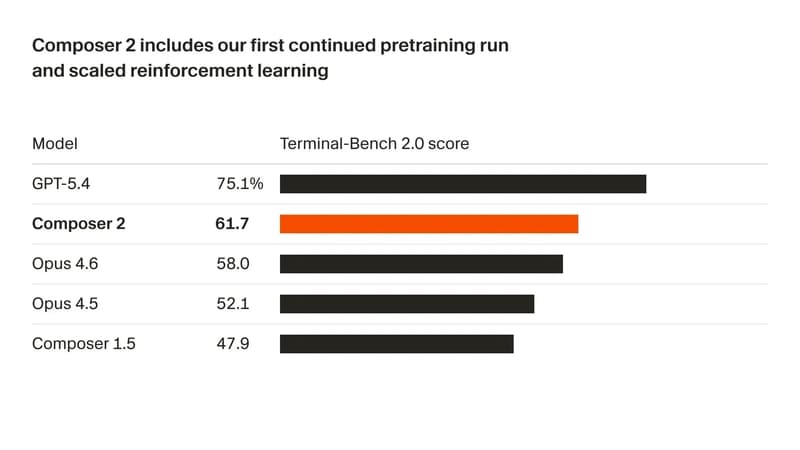
Composer 2: What is new and Compares with Claude Opus 4.6 & GPT-5.4
Dev.to
How UCP Breaks Your E-Commerce Tracking Stack: A Platform-by-Platform Analysis
Dev.to
AI Text Analyzer vs Asking Friends: Which Gives Better Perspective?
Dev.to
[D] Cathie wood claims ai productivity wave is starting, data shows 43% of ceos save 8+ hours weekly
Reddit r/MachineLearning

Microsoft hires top AI researchers from Allen Institute for AI for Suleyman's Superintelligence team
THE DECODER


