
ProMAS: Proactive Error Forecasting for Multi-Agent Systems Using Markov Transition Dynamics
arXiv cs.AI / 3/24/2026
💬 OpinionSignals & Early TrendsIdeas & Deep AnalysisModels & Research
Key Points
- ProMAS is a proposed proactive error-forecasting framework for multi-agent systems with LLMs, aiming to intervene in real time rather than relying on post-hoc failure analysis.
- The method uses “Causal Delta Features” to quantify semantic displacement, maps them into a quantized Vector Markov Space, and models reasoning as probabilistic Markov transitions.
- By combining a Proactive Prediction Head with Jump Detection, ProMAS localizes errors based on risk acceleration instead of static thresholds, targeting lower intervention latency.
- On the Who&When benchmark, ProMAS reportedly achieves 22.97% step-level accuracy while using only 27% of reasoning logs, reducing data overhead by 73% while performing comparably to reactive monitors like MASC.
- The authors note an accuracy trade-off versus post-hoc methods, but argue the approach better balances diagnostic precision with the real-time needs of autonomous multi-agent reasoning.
Related Articles
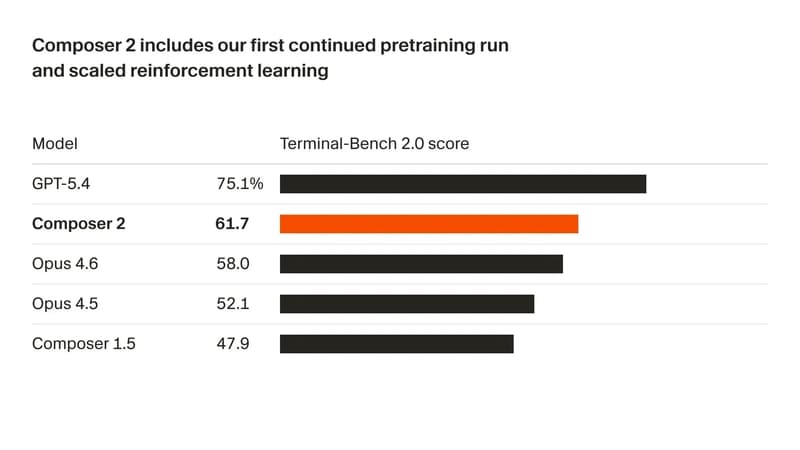
Composer 2: What is new and Compares with Claude Opus 4.6 & GPT-5.4
Dev.to
How UCP Breaks Your E-Commerce Tracking Stack: A Platform-by-Platform Analysis
Dev.to
AI Text Analyzer vs Asking Friends: Which Gives Better Perspective?
Dev.to
[D] Cathie wood claims ai productivity wave is starting, data shows 43% of ceos save 8+ hours weekly
Reddit r/MachineLearning
Microsoft hires top AI researchers from Allen Institute for AI for Suleyman's Superintelligence team
THE DECODER


