
CARE: Privacy-Compliant Agentic Reasoning with Evidence Discordance
arXiv cs.CL / 4/3/2026
💬 OpinionIdeas & Deep AnalysisModels & Research
Key Points
- The paper studies how LLM systems degrade in high-stakes settings when evidence is internally inconsistent, using healthcare cases where patient symptoms contradict medical signs.
- It introduces MIMIC-DOS, a new ICU short-horizon organ dysfunction worsening prediction dataset derived from MIMIC-IV, curated specifically for sign-symptom discordance.
- The authors propose CARE, a multi-stage privacy-compliant agentic reasoning framework that separates roles: a remote LLM generates structured reasoning scaffolds without seeing sensitive patient data, while a local LLM uses them for evidence acquisition and final decisions.
- Experiments indicate CARE outperforms several baseline approaches (including single-pass LLMs and other agentic pipelines) across key metrics, showing improved robustness to conflicting clinical evidence while maintaining privacy constraints.
Related Articles

90000 Tech Workers Got Fired This Year and Everyone Is Blaming AI but Thats Not the Whole Story
Dev.to

Microsoft’s $10 Billion Japan Bet Shows the Next AI Battleground Is National Infrastructure
Dev.to
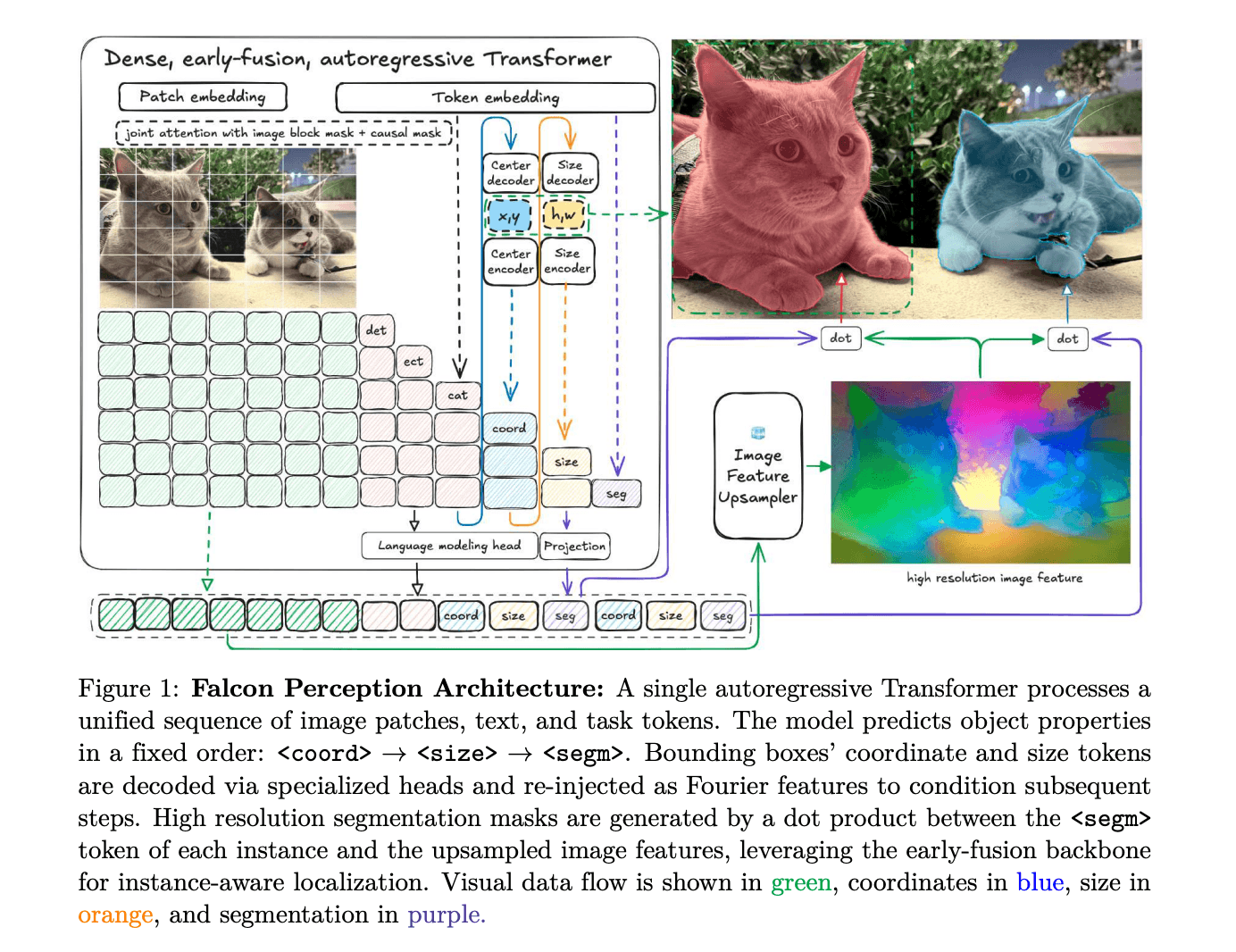
TII Releases Falcon Perception: A 0.6B-Parameter Early-Fusion Transformer for Open-Vocabulary Grounding and Segmentation from Natural Language Prompts
MarkTechPost
The house asked me a question
Dev.to

Precision Clip Selection: How AI Suggests Your In and Out Points
Dev.to


