
Low Rank Tensor Completion via Adaptive ADMM
arXiv stat.ML / 5/6/2026
📰 NewsDeveloper Stack & InfrastructureIdeas & Deep AnalysisModels & Research
Key Points
- The paper introduces a new low-rank tensor completion (TC) algorithm for partially observed tensors, extending matrix completion to the tensor setting.
- It reformulates nuclear-norm minimization into multiple subproblems and solves them iteratively using an ADMM optimization framework with closed-form proximal operators.
- The method incorporates over-relaxation and an adaptive penalty-parameter update strategy to accelerate convergence and improve performance.
- Experiments show the proposed approach achieves lower normalized mean square error (NMSE) than existing state-of-the-art methods, including standard nuclear-norm approaches and hybrids with matrix factorization.
- Convergence is further improved by initializing ADMM with the solution from a current state-of-the-art method, indicating practical ways to enhance runtime/accuracy.
Related Articles

Top 10 Free AI Tools for Students in 2026: The Ultimate Study Guide
Dev.to

SIFS (SIFS Is Fast Search) - local code search for coding agents
Dev.to

AI as Your Contingency Co-Pilot: Automating Wedding Day 'What-Ifs'
Dev.to

BizNode's semantic memory (Qdrant) makes your bot smarter over time — it remembers past conversations and answers...
Dev.to
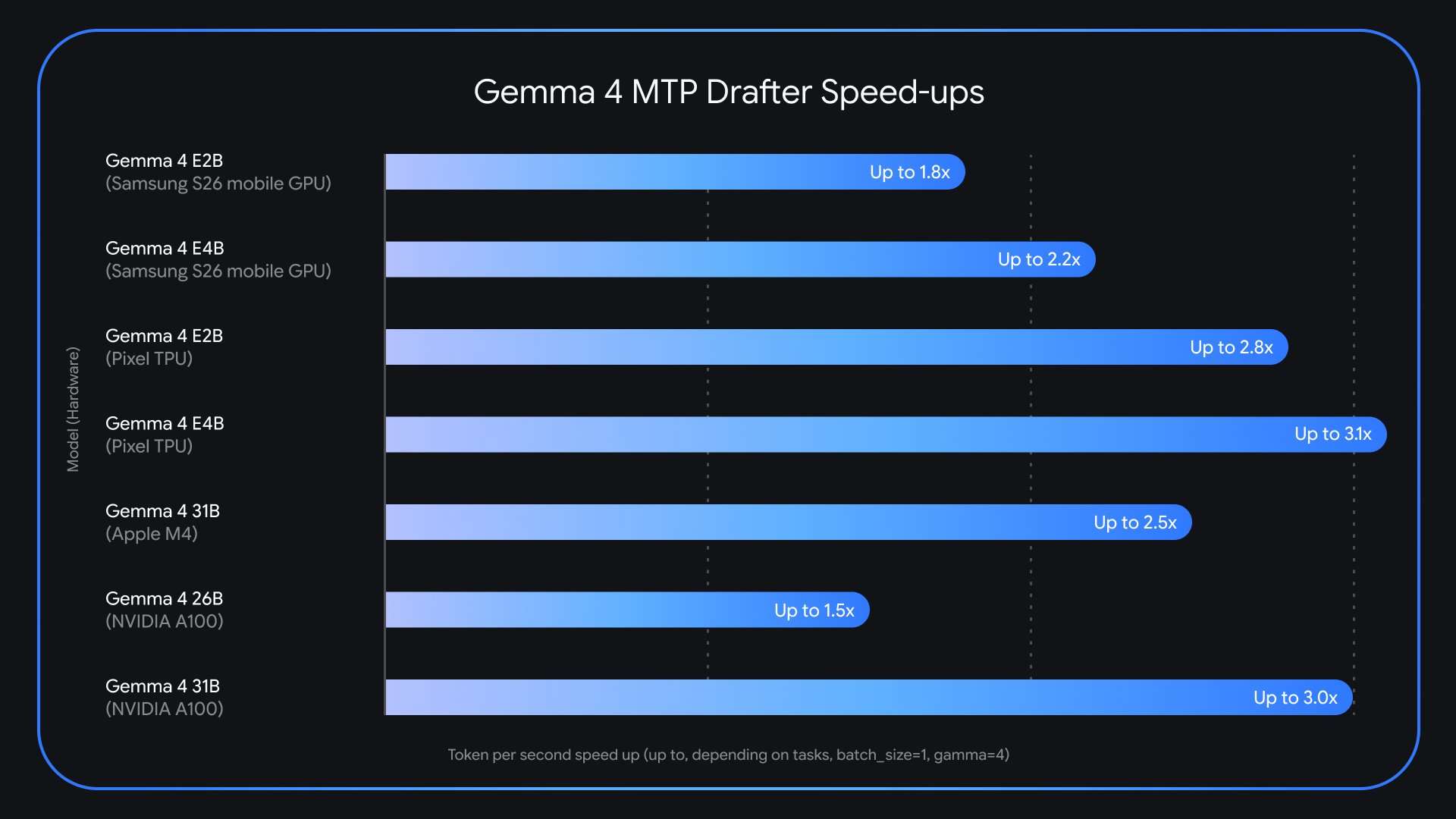
Google AI Releases Multi-Token Prediction (MTP) Drafters for Gemma 4: Delivering Up to 3x Faster Inference Without Quality Loss
MarkTechPost


