
Deterministic Hallucination Detection in Medical VQA via Confidence-Evidence Bayesian Gain
arXiv cs.AI / 3/24/2026
💬 OpinionSignals & Early TrendsIdeas & Deep AnalysisModels & Research
Key Points
- The paper addresses hallucinations in medical multimodal VQA systems, where models may produce answers that contradict the input image and could be unsafe for clinical use.
- It argues that hallucinated responses leave a detectable signature in the model’s own token-level log-probabilities, specifically inconsistent confidence and low sensitivity to visual evidence.
- It introduces Confidence-Evidence Bayesian Gain (CEBaG), a deterministic, self-contained hallucination detection approach that avoids stochastic sampling and external natural language inference models.
- Across four medical MLLMs and three VQA benchmarks (16 settings), CEBaG achieves the best AUC in 13/16 settings and improves over Vision-Amplified Semantic Entropy (VASE) by an average of 8 AUC points.
- The authors report no task-specific hyperparameters are required and plan to release code after acceptance.
💡 Insights using this article
This article is featured in our daily AI news digest — key takeaways and action items at a glance.
Related Articles
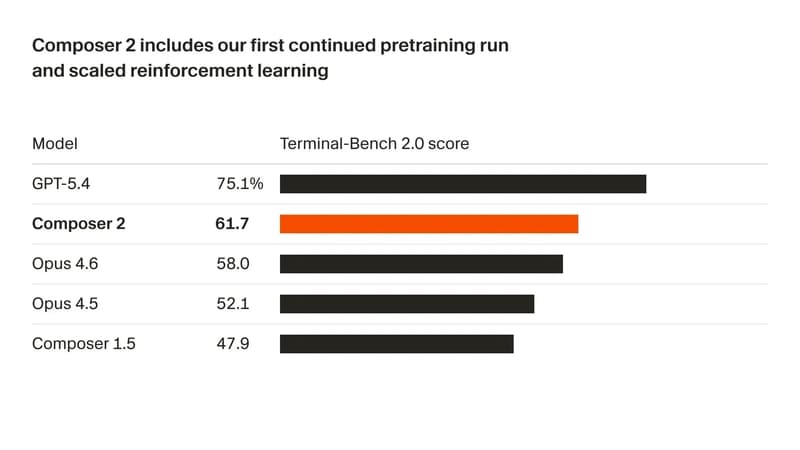
Composer 2: What is new and Compares with Claude Opus 4.6 & GPT-5.4
Dev.to
How UCP Breaks Your E-Commerce Tracking Stack: A Platform-by-Platform Analysis
Dev.to
AI Text Analyzer vs Asking Friends: Which Gives Better Perspective?
Dev.to
[D] Cathie wood claims ai productivity wave is starting, data shows 43% of ceos save 8+ hours weekly
Reddit r/MachineLearning

Microsoft hires top AI researchers from Allen Institute for AI for Suleyman's Superintelligence team
THE DECODER


