
Uncertainty Quantification in CNN Through the Bootstrap of Convex Neural Networks
arXiv cs.LG / 4/15/2026
💬 OpinionIdeas & Deep AnalysisModels & Research
Key Points
- The paper argues that uncertainty quantification (UQ) for convolutional neural networks (CNNs) has been underdeveloped, limiting high-stakes domains like medicine where prediction uncertainty matters.
- It proposes a bootstrap-based framework that uses “convexified neural networks” to provide theoretical consistency guarantees for the quality of estimated uncertainty.
- The method is designed to be computationally efficient by using warm-starts in each bootstrap iteration rather than refitting the model from scratch.
- The authors introduce a transfer learning approach to extend the framework beyond convexified networks so it can work with arbitrary neural network architectures.
- Experiments on multiple image datasets show improved performance versus baseline CNN approaches and several state-of-the-art UQ methods.
Related Articles
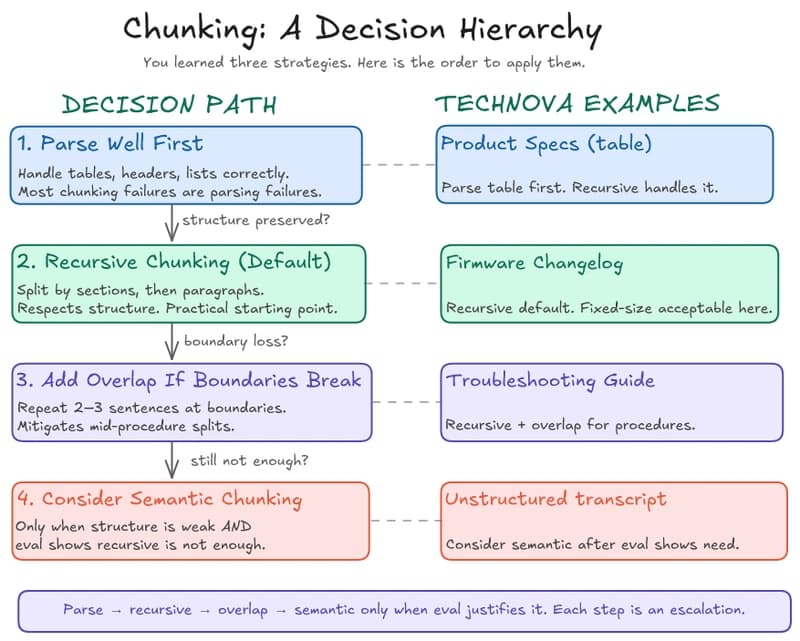
RAG in Practice — Part 4: Chunking, Retrieval, and the Decisions That Break RAG
Dev.to
Why dynamically routing multi-timescale advantages in PPO causes policy collapse (and a simple decoupled fix) [R]
Reddit r/MachineLearning

How AI Interview Assistants Are Changing Job Preparation in 2026
Dev.to

Consciousness in Artificial Intelligence: Insights from the Science ofConsciousness
Dev.to

NEW PROMPT INJECTION
Dev.to


