
Meet Dynamic Individual Preferences: Resolving Conflicting Human Value with Paired Fine-Tuning
arXiv cs.CL / 4/15/2026
💬 OpinionIdeas & Deep AnalysisModels & Research
Key Points
- The paper proposes “Preference-Paired Fine-Tuning (PFT)” to personalize LLMs for individuals whose preferences are diverse, contradictory, and change over time.
- It introduces a new evaluation dataset, “Value Conflict Dilemma (VCD),” containing scenarios with conflicting human preferences to test how well models handle trade-offs.
- Experiments show PFT improves performance over single-preference training and beats methods including DPO and SFT, reaching up to 96.6% accuracy on multi-choice classification and an open-ended generation score of 8.69.
- With limited user history, PFT can infer a user-specific preference vector quickly and yields a 44.76% improvement in alignment versus single-preference models.
- Overall, the work frames preference personalization as a structured fine-tuning problem using paired preference signals to resolve conflicts.
Related Articles
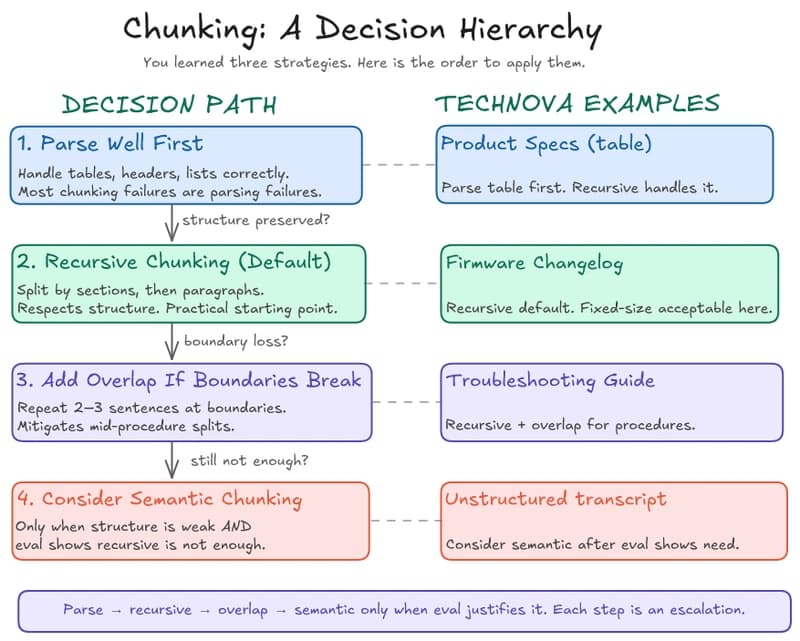
RAG in Practice — Part 4: Chunking, Retrieval, and the Decisions That Break RAG
Dev.to
Why dynamically routing multi-timescale advantages in PPO causes policy collapse (and a simple decoupled fix) [R]
Reddit r/MachineLearning

How AI Interview Assistants Are Changing Job Preparation in 2026
Dev.to

Consciousness in Artificial Intelligence: Insights from the Science ofConsciousness
Dev.to
NEW PROMPT INJECTION
Dev.to


