
CLT-Forge: A Scalable Library for Cross-Layer Transcoders and Attribution Graphs
arXiv cs.LG / 3/24/2026
📰 NewsIdeas & Deep AnalysisTools & Practical UsageModels & Research
Key Points
- The paper introduces CLT-Forge, an open-source library aimed at scaling mechanistic interpretability for Large Language Models using Cross-Layer Transcoders (CLTs) and feature attribution graphs.
- It addresses a key bottleneck in existing approaches—feature attribution graphs being large and redundant—by leveraging CLTs that share features across layers while keeping layer-specific decoding.
- CLT-Forge provides an end-to-end framework that combines distributed scalable training (with model sharding and compressed activation caching) and an automated interpretability pipeline for feature analysis and explanation.
- The library computes attribution graphs via Circuit-Tracer and includes a flexible visualization interface to make CLT-based interpretability more practical to use.
- The authors make the code publicly available on GitHub to enable researchers to train, analyze, and visualize CLTs at scale.
Related Articles
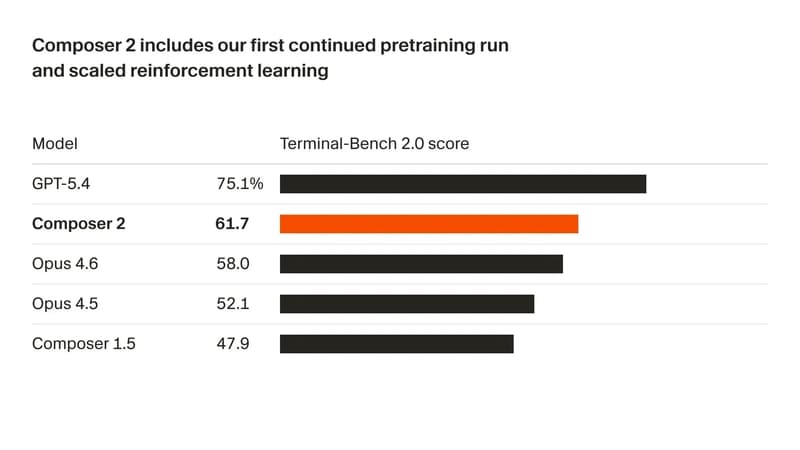
Composer 2: What is new and Compares with Claude Opus 4.6 & GPT-5.4
Dev.to
How UCP Breaks Your E-Commerce Tracking Stack: A Platform-by-Platform Analysis
Dev.to
AI Text Analyzer vs Asking Friends: Which Gives Better Perspective?
Dev.to
[D] Cathie wood claims ai productivity wave is starting, data shows 43% of ceos save 8+ hours weekly
Reddit r/MachineLearning
Microsoft hires top AI researchers from Allen Institute for AI for Suleyman's Superintelligence team
THE DECODER


