
dWorldEval: Scalable Robotic Policy Evaluation via Discrete Diffusion World Model
arXiv cs.RO / 4/27/2026
📰 NewsDeveloper Stack & InfrastructureModels & Research
Key Points
- The paper introduces dWorldEval, a scalable method for evaluating robotics policies by using a discrete diffusion world model as an evaluation proxy rather than running policies across every environment/task explicitly.
- dWorldEval unifies multiple modalities—vision, language, and robotic actions—into a single token space and models them with one transformer-based denoising network.
- To preserve consistency over space and time, the approach adds a sparse keyframe memory mechanism, while a progress token tracks task-completion status.
- During inference, the model jointly predicts future observations and the progress token, enabling automatic success determination when progress reaches 1.
- Experiments show dWorldEval outperforms prior methods (WorldEval, Ctrl-World, Ctrl-World, and WorldGym) across LIBERO, RoboTwin, and several real-robot tasks, suggesting a new scalable world-modeling paradigm for robotics evaluation.
💡 Insights using this article
This article is featured in our daily AI news digest — key takeaways and action items at a glance.
Related Articles
LLMs will be a commodity
Reddit r/artificial

What it feels like to have to have Qwen 3.6 or Gemma 4 running locally
Reddit r/LocalLLaMA
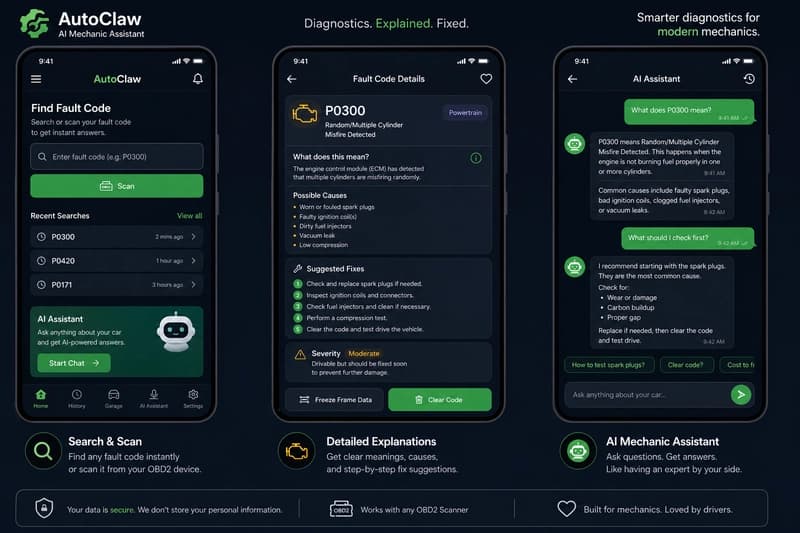
From Fault Codes to Smart Fixes: How Google Cloud NEXT ’26 Inspired My AI Mechanic Assistant
Dev.to

Dex lands $5.3M to grow its AI-driven talent matching platform
Tech.eu

7 OpenClaw Money-Making Cases in One Week — and the Hidden Cost Problem Behind Them
Dev.to


