
SinkTrack: Attention Sink based Context Anchoring for Large Language Models
arXiv cs.CV / 4/14/2026
💬 OpinionSignals & Early TrendsIdeas & Deep AnalysisModels & Research
Key Points
- SinkTrack is a proposed context-anchoring method for LLMs that leverages the intrinsic “attention sink” behavior that tends to keep high attention on the <BOS> token throughout generation.
- The method injects key contextual features (e.g., from the input instruction or image) into the <BOS> representation to reduce attention drift, thereby mitigating hallucination and context forgetting.
- SinkTrack is training-free, plug-and-play, and adds negligible inference overhead, making it practical to integrate into existing LLM pipelines.
- Reported experiments show consistent improvements on both text and multimodal benchmarks (e.g., +21.6% on SQuAD2.0 with Llama3.1-8B-Instruct and +22.8% on M3CoT with Qwen2.5-VL-7B-Instruct) across architectures and scales.
- The paper includes an analysis of the mechanism in terms of information delivery and provides open-source code.
💡 Insights using this article
This article is featured in our daily AI news digest — key takeaways and action items at a glance.
Related Articles

Black Hat Asia
AI Business

The Complete Guide to Better Meeting Productivity with AI Note-Taking
Dev.to

5 Ways Real-Time AI Can Boost Your Sales Call Performance
Dev.to
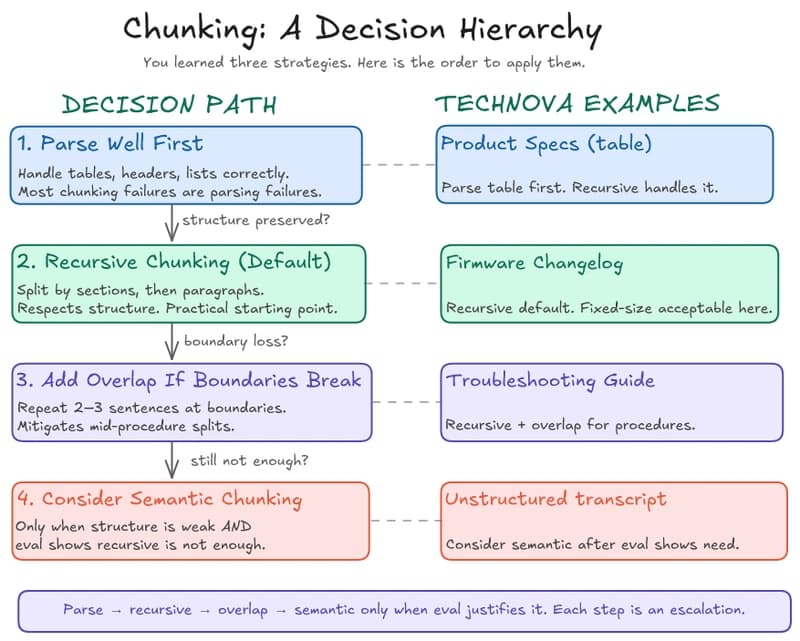
RAG in Practice — Part 4: Chunking, Retrieval, and the Decisions That Break RAG
Dev.to
Why dynamically routing multi-timescale advantages in PPO causes policy collapse (and a simple decoupled fix) [R]
Reddit r/MachineLearning


