
Most ReLU Networks Admit Identifiable Parameters
arXiv cs.LG / 5/6/2026
💬 OpinionIdeas & Deep AnalysisModels & Research
Key Points
- The paper studies when deep ReLU networks are identifiable, asking under what conditions a realized function determines the network parameters up to only standard symmetries like scaling and permutation.
- It introduces a new analytical framework using weighted polyhedral complexes to go beyond hidden redundancies and characterize identifiability more precisely.
- The main theorem states that for architectures where both input and hidden layers have width at least two, there is an open set of parameters with identifiable representations, leading to an exact functional dimension formula.
- The authors show that even minimal functional representations can still exhibit non-trivial parameter redundancies, and they prove a generic depth hierarchy: for an open set of parameters, the realized function cannot be generically represented by any shallower network.
- Overall, the results sharpen our understanding of the relationship between network architecture, parameter redundancy, and expressive power across depths for ReLU models.
Related Articles

Top 10 Free AI Tools for Students in 2026: The Ultimate Study Guide
Dev.to

AI as Your Contingency Co-Pilot: Automating Wedding Day 'What-Ifs'
Dev.to
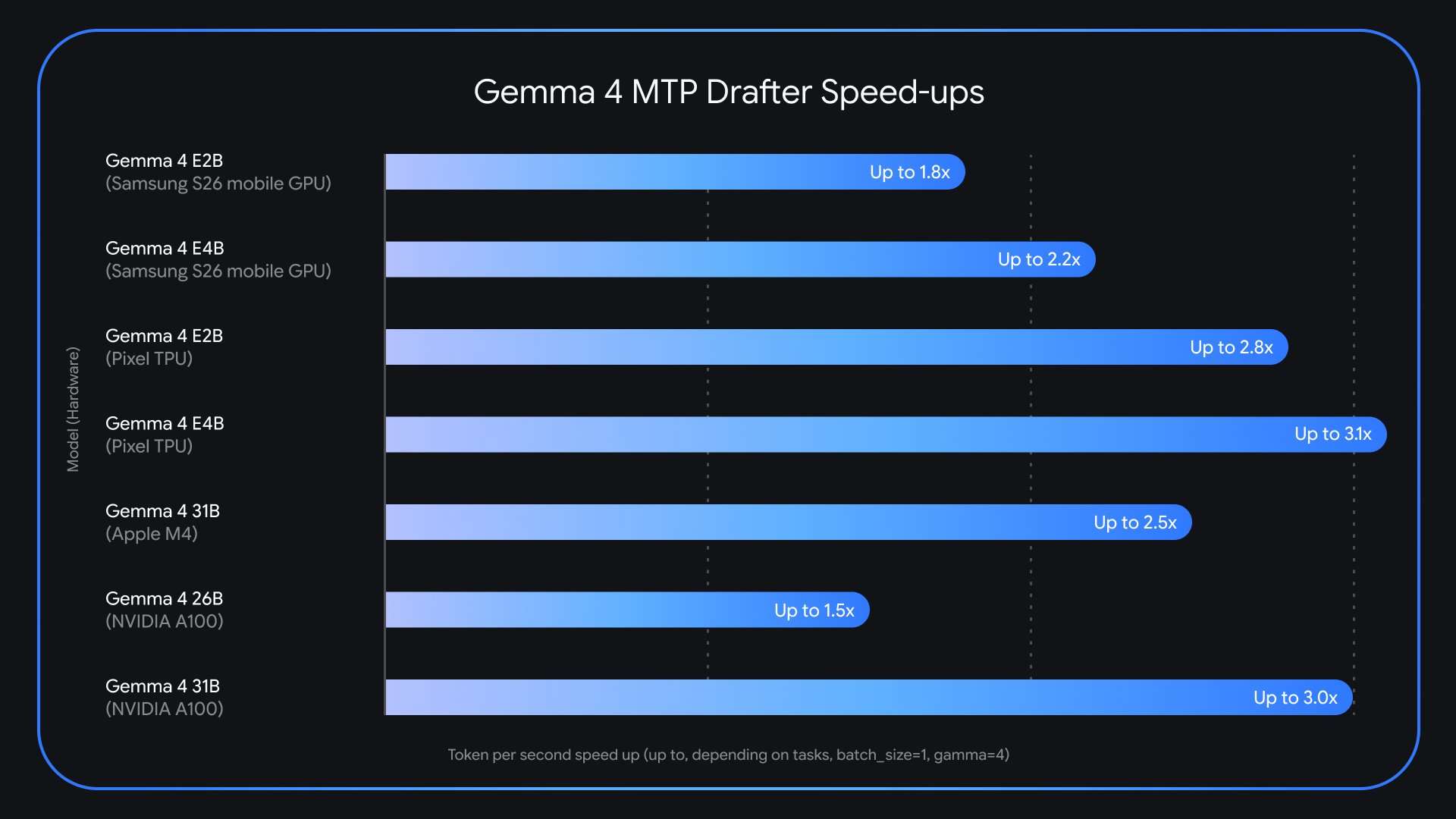
Google AI Releases Multi-Token Prediction (MTP) Drafters for Gemma 4: Delivering Up to 3x Faster Inference Without Quality Loss
MarkTechPost
When Claude Hallucinates in Court: The Latham & Watkins Incident and What It Means for Attorney Liability
MarkTechPost
Solidity LM surpasses Opus
Reddit r/LocalLLaMA


