
SkillFlow:Benchmarking Lifelong Skill Discovery and Evolution for Autonomous Agents
arXiv cs.AI / 4/21/2026
📰 NewsSignals & Early TrendsModels & Research
Key Points
- SkillFlow is a new arXiv benchmark that evaluates whether autonomous agents can discover, repair, and continuously evolve a reusable external skill library over time, not just use given skills.
- The benchmark includes 166 tasks across 20 task families, all built on a Domain-Agnostic Execution Flow (DAEF) workflow framework to ensure consistent agent procedures.
- Agents are tested with an Agentic Lifelong Learning protocol: starting with no skills, solving tasks sequentially within each family, creating “skill patches” from trajectories and rubrics, and carrying forward the updated library.
- Experiments show sizable gaps in lifelong skill evolution quality, with Claude Opus 4.6 improving success from 62.65% to 71.08%, while other models show weaker or even negative outcomes despite high or low skill usage.
- SkillFlow is positioned as a structured testbed plus an empirical analysis of skill discovery, patching, transfer, and the main failure modes under lifelong evaluation.
Related Articles

¿Hasta qué punto podría la IA reemplazarnos en nuestros trabajos? A veces creo que la gente exagera un poco.
Reddit r/artificial
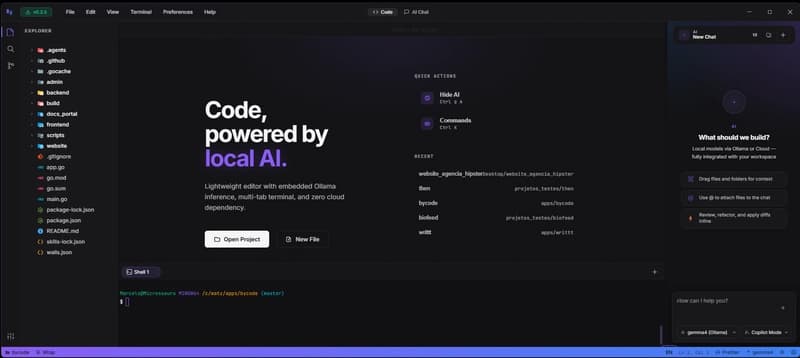
Why I Built byCode: A 100% Local, Privacy-First AI IDE
Dev.to

Magnificent irony as Meta staff unhappy about running surveillance software on work PCs
The Register
ETHENEA (ETHENEA Americas LLC) Analyst View: Asset Allocation Resilience in the 2026 Global Macro Cycle
Dev.to
Blaze Balance Engine SaaS
Dev.to


