
What do your logits know? (The answer may surprise you!)
arXiv cs.AI / 4/14/2026
💬 OpinionSignals & Early TrendsIdeas & Deep AnalysisModels & Research
Key Points
- The paper studies whether information stored in transformer internals—specifically intermediate representations like low-dimensional projections (“tuned lens”) and the final top-k logits—can be probed to extract more than what model outputs directly show.
- Using vision-language models, it presents a systematic comparison of how much task-relevant and task-irrelevant information remains at different representational “bottlenecks” during compression from the residual stream to the logits.
- The authors find that even seemingly accessible bottlenecks based on top logit values can leak task-irrelevant information about image queries.
- In some cases, the leakage from top logit–based signals matches the amount of information obtainable from direct projections of the full residual stream.
- The work highlights an information-leakage risk for model owners, where probing by users could reveal data intended to be inaccessible, motivating stronger controls and evaluation of internal-exposure attack surfaces.
Related Articles
Small NSFW model for chatbot
Reddit r/LocalLLaMA
ChatGPT for Nurses: Prompts That Help You Document, Communicate, and Study
Dev.to
I Added a Stopwatch to My AI in 1 LOC Using the Livingrimoire While Corporations Need a Year
Dev.to
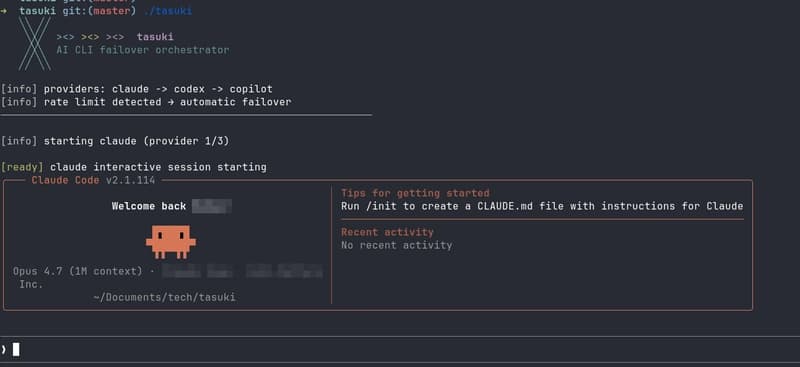
Built tasuki — an AI CLI Orchestrator that Seamlessly Hands Off Between Tools
Dev.to

I built a GNOME extension for Codex with local/remote history, live filters, Markdown export, and a read-only MCP server
Reddit r/artificial


