
To Memorize or to Retrieve: Scaling Laws for RAG-Considerate Pretraining
arXiv cs.CL / 4/3/2026
💬 OpinionIdeas & Deep AnalysisModels & Research
Key Points
- The paper investigates how to balance parametric knowledge from pretraining with non-parametric knowledge from retrieval in RAG systems when total data budgets are fixed.
- It trains OLMo-2-based language models from 30M to 3B parameters using up to 100B DCLM tokens while varying both pretraining corpus size and retrieval store size, then evaluates across reasoning, scientific QA, and open-domain QA benchmarks.
- Results show that retrieval consistently boosts performance over parametric-only baselines across model sizes, and the authors propose a three-dimensional scaling framework linking model size, pretraining tokens, and retrieval corpus size.
- The scaling “manifold” is used to estimate optimal data allocation strategies between pretraining and retrieval, with marginal gains from retrieval depending on model scale, task type, and how saturated the pretraining is.
- Overall, the study provides quantitative guidance on when and how retrieval should complement pretraining for designing more scalable language modeling systems.
Related Articles

90000 Tech Workers Got Fired This Year and Everyone Is Blaming AI but Thats Not the Whole Story
Dev.to

Microsoft’s $10 Billion Japan Bet Shows the Next AI Battleground Is National Infrastructure
Dev.to
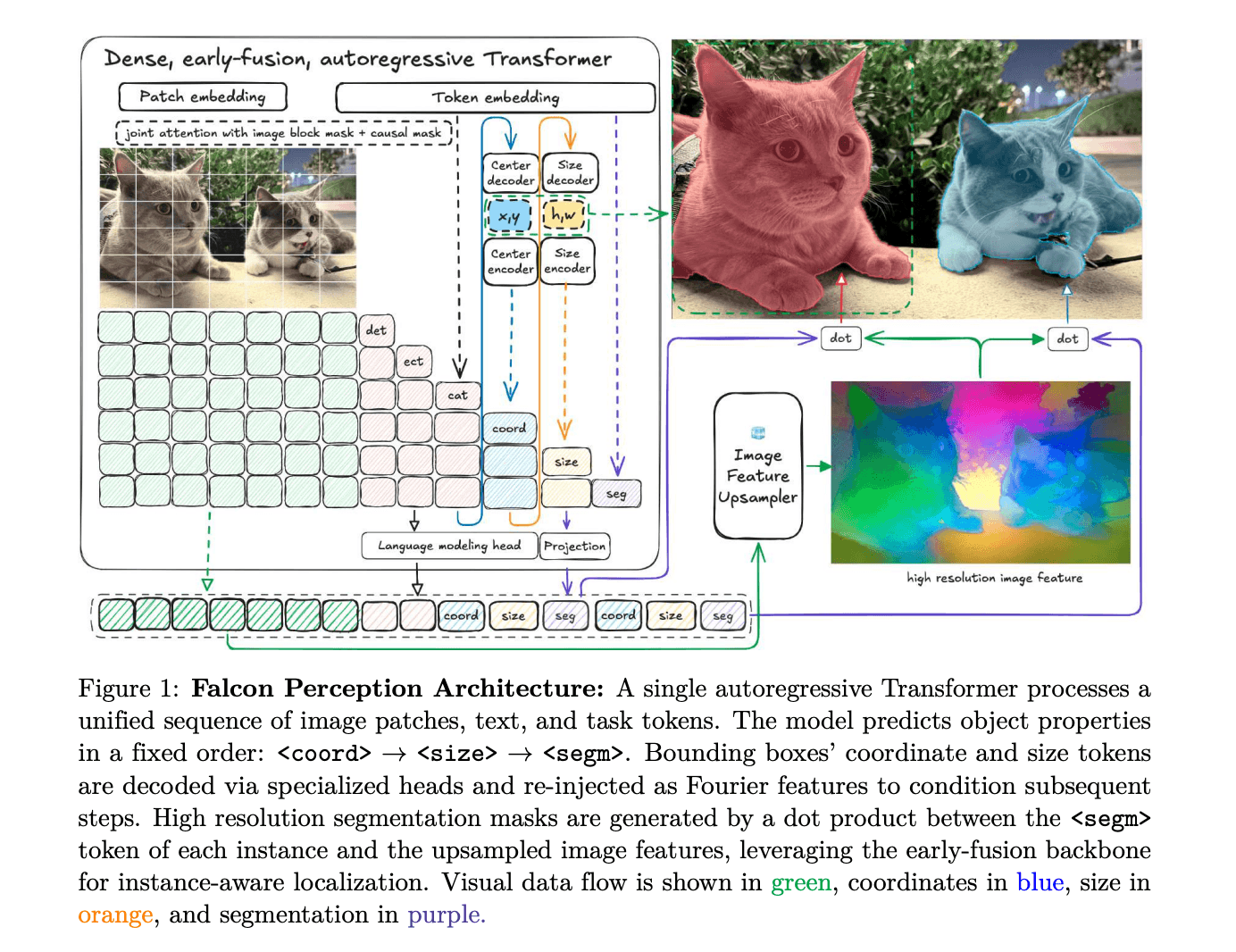
TII Releases Falcon Perception: A 0.6B-Parameter Early-Fusion Transformer for Open-Vocabulary Grounding and Segmentation from Natural Language Prompts
MarkTechPost

The house asked me a question
Dev.to

Precision Clip Selection: How AI Suggests Your In and Out Points
Dev.to


