
Do LLM-Driven Agents Exhibit Engagement Mechanisms? Controlled Tests of Information Load, Descriptive Norms, and Popularity Cues
arXiv cs.AI / 3/24/2026
💬 OpinionIdeas & Deep AnalysisModels & Research
Key Points
- The study tests whether LLM-driven agents in a Weibo-like simulation exhibit engagement mechanisms that match interpretable social-psychology hypotheses rather than just producing plausible text behavior.
- Researchers manipulate information load and descriptive norms while letting popularity cues (likes and reshares) evolve endogenously to preserve realistic bandwagon feedback.
- Results show simulated engagement changes systematically with information load and descriptive norms, supporting some theory-consistent behavioral sensitivity.
- Sensitivity to popularity cues is found to be context-dependent, suggesting the agents follow mechanisms conditionally rather than through rigid prompt compliance.
- The paper outlines methodological lessons for simulation-based communication research, including multi-condition “stress tests” and the need for explicit no-norm baselines because default prompts aren’t true blank controls.
Related Articles
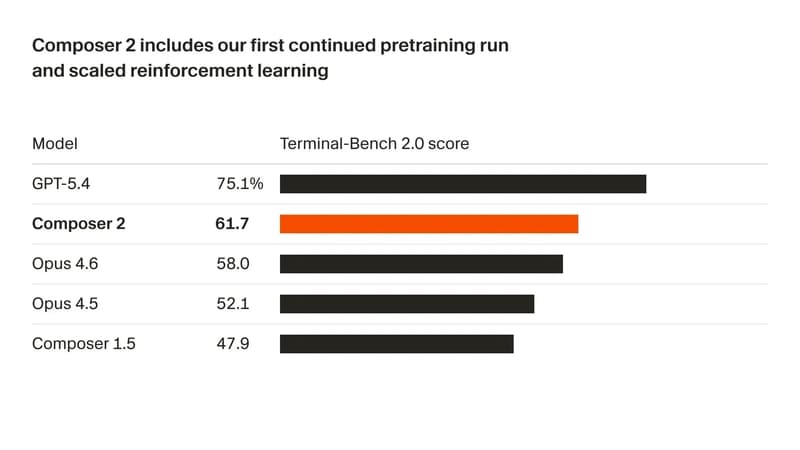
Composer 2: What is new and Compares with Claude Opus 4.6 & GPT-5.4
Dev.to
How UCP Breaks Your E-Commerce Tracking Stack: A Platform-by-Platform Analysis
Dev.to
AI Text Analyzer vs Asking Friends: Which Gives Better Perspective?
Dev.to
[D] Cathie wood claims ai productivity wave is starting, data shows 43% of ceos save 8+ hours weekly
Reddit r/MachineLearning

Microsoft hires top AI researchers from Allen Institute for AI for Suleyman's Superintelligence team
THE DECODER


