
Dynamic Context Evolution for Scalable Synthetic Data Generation
arXiv cs.CL / 4/9/2026
💬 OpinionSignals & Early TrendsIdeas & Deep AnalysisTools & Practical UsageModels & Research
Key Points
- The paper introduces “cross-batch mode collapse” for LLM-based synthetic data generation, where repeated independent prompting gradually reduces output diversity.
- It proposes Dynamic Context Evolution (DCE), combining verbalized tail sampling, semantic memory for near-duplicate rejection across batches, and adaptive prompt evolution that rebuilds prompts from memory to preserve diversity.
- Experiments across three domains and two model families (gpt-5-mini and claude-haiku-4-5) show DCE reduces mode collapse to 0.0% (vs. about 5.6% for naive prompting) while yielding substantially more stable conceptual clusters.
- The approach is validated using an independent embedding model (all-MiniLM-L6-v2) and remains robust under sensitivity sweeps of VTS threshold (tau) and dedup threshold (delta).
- DCE reportedly improves candidate diversity without fine-tuning or custom architectures, costing roughly $0.50 per 1,000 candidates using standard API calls.
Related Articles

Black Hat USA
AI Business

Black Hat Asia
AI Business
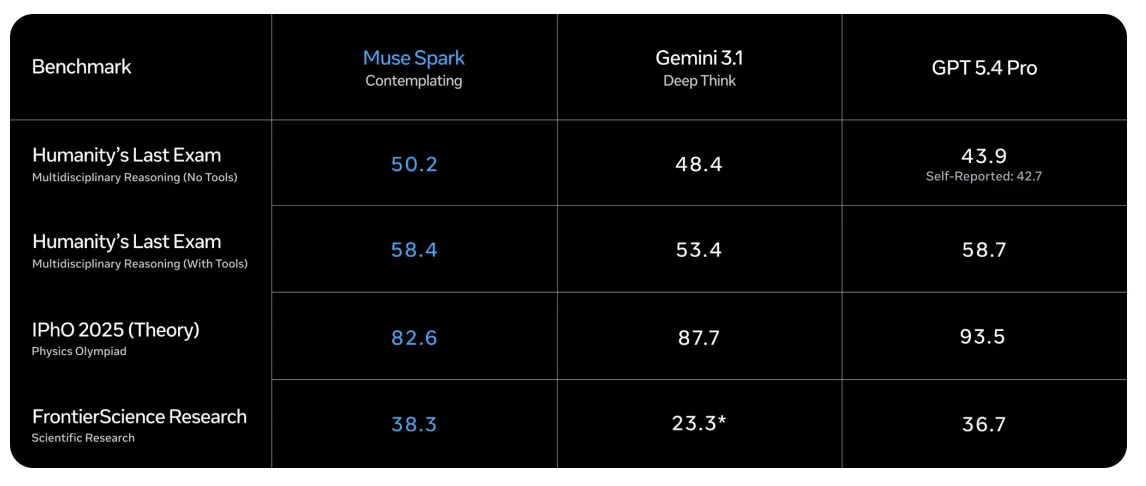
Meta Superintelligence Lab Releases Muse Spark: A Multimodal Reasoning Model With Thought Compression and Parallel Agents
MarkTechPost

Chatbots are great at manipulating people to buy stuff, Princeton boffins find
The Register
I tested and ranked every ai companion app I tried and here's my honest breakdown
Reddit r/artificial


