
Multimodal Learning on Low-Quality Data with Conformal Predictive Self-Calibration
arXiv cs.CV / 5/6/2026
📰 NewsIdeas & Deep AnalysisModels & Research
Key Points
- The paper studies multimodal learning under low-quality data, attributing both modality imbalance and noisy corruption to miscalibrated predictive uncertainty about the reliability of modalities and instances during training.
- It introduces Conformal Predictive Self-Calibration (CPSC), a unified framework that uses conformal prediction to enable self-guided, online calibration while the model trains.
- CPSC combines Representation Self-Calibration (decomposing unimodal features and selectively fusing the most reliable parts) with Gradient Self-Calibration (reweighting or redirecting gradient flow using instance-wise reliability scores).
- The approach includes a self-update mechanism for the conformal predictor so the calibration components co-evolve consistently throughout optimization.
- Experiments on six benchmark datasets in both imbalanced and noisy regimes show CPSC outperforms prior state-of-the-art multimodal methods, and the authors release code on GitHub.
Related Articles

Top 10 Free AI Tools for Students in 2026: The Ultimate Study Guide
Dev.to

AI as Your Contingency Co-Pilot: Automating Wedding Day 'What-Ifs'
Dev.to
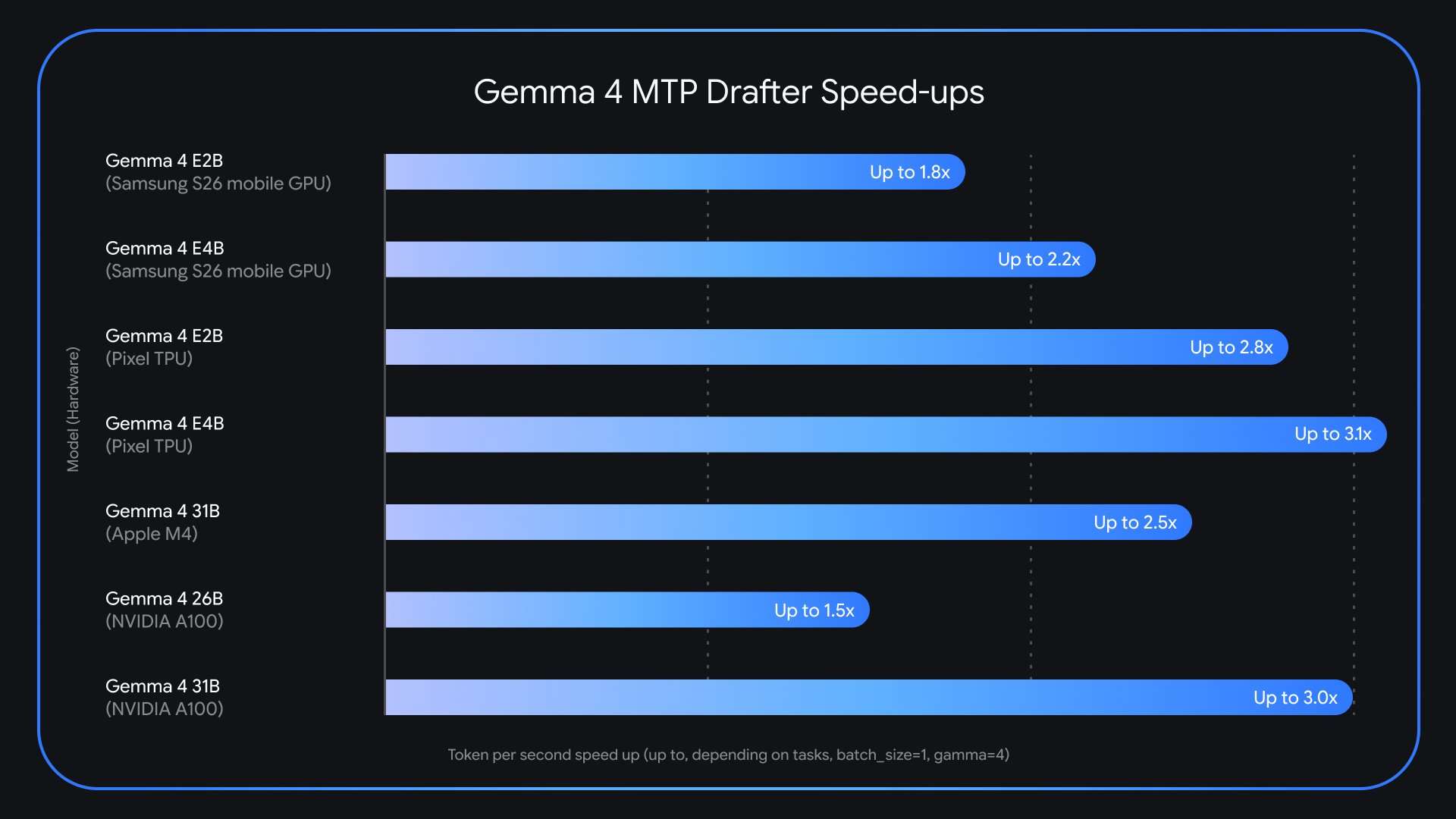
Google AI Releases Multi-Token Prediction (MTP) Drafters for Gemma 4: Delivering Up to 3x Faster Inference Without Quality Loss
MarkTechPost
When Claude Hallucinates in Court: The Latham & Watkins Incident and What It Means for Attorney Liability
MarkTechPost
Solidity LM surpasses Opus
Reddit r/LocalLLaMA


