
Reinforcing Consistency in Video MLLMs with Structured Rewards
arXiv cs.CV / 4/3/2026
💬 OpinionSignals & Early TrendsIdeas & Deep AnalysisModels & Research
Key Points
- The paper identifies a key failure mode in video multimodal large language models (MLLMs): outputs can sound globally plausible while lacking faithful visual and temporal grounding (e.g., hallucinated objects, wrong attributes, or collapsed repeated events).
- It introduces a compositional consistency audit that decomposes captions into factual and temporal claims to check whether correct high-level answers are backed by valid lower-level evidence, finding that even correct root relational claims often lack reliable attribute/existence support.
- It argues that sentence-level supervision and sentence-level RL rewards are too coarse to localize specific grounding failures that matter for faithful video understanding.
- The authors propose a structured reinforcement learning reward composed of (1) an instance-aware scene-graph factual reward, (2) a temporal reward for event ordering/repetition, and (3) a video-grounded VQA hierarchical self-verification reward.
- Experiments on temporal, general video understanding, and hallucination-focused benchmarks show consistent improvements across open-source MLLM backbones, supporting structured reward shaping as a practical path to more faithful video reasoning.
Related Articles

Black Hat Asia
AI Business

90000 Tech Workers Got Fired This Year and Everyone Is Blaming AI but Thats Not the Whole Story
Dev.to

Microsoft’s $10 Billion Japan Bet Shows the Next AI Battleground Is National Infrastructure
Dev.to
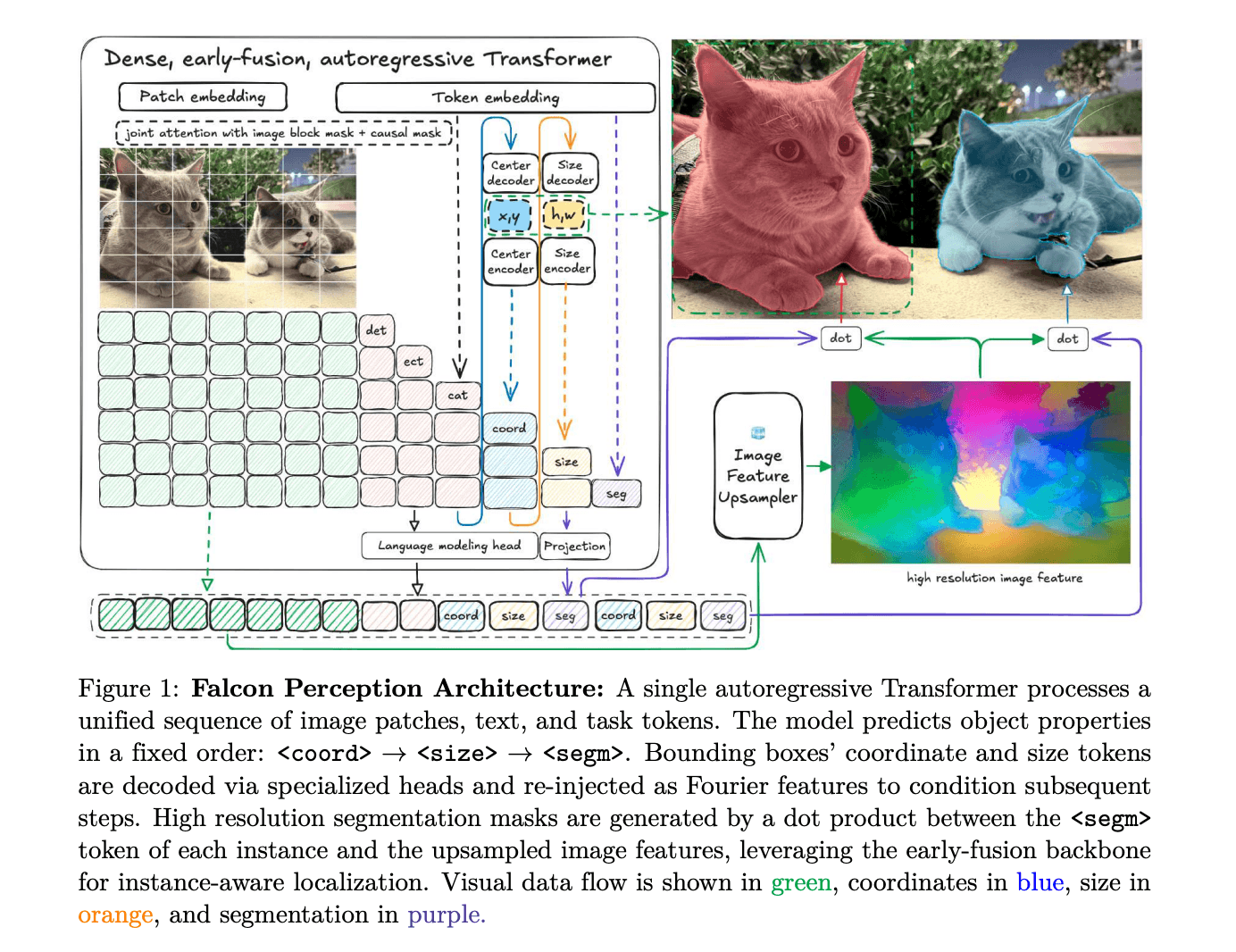
TII Releases Falcon Perception: A 0.6B-Parameter Early-Fusion Transformer for Open-Vocabulary Grounding and Segmentation from Natural Language Prompts
MarkTechPost

Portable eye scanner powered by AI expands access to low-cost community screening
Reddit r/artificial


