
Predicting Euler Characteristics and Constructing Topological Structure Using Machine Learning Techniques
arXiv cs.LG / 5/6/2026
📰 NewsIdeas & Deep AnalysisModels & Research
Key Points
- The paper presents a machine-learning method that predicts topological properties, specifically the Euler characteristic, directly from input images using neural networks.
- The approach maps an image to an implicit “spin configuration” (via a unit vector field) and then estimates the Euler characteristic by computing the skyrmion number of that configuration.
- Unlike typical data-hungry pipelines, the model is designed to learn without large pre-existing datasets, using only a single geometric image as input, inspired by techniques from solid-state physics.
- Because multiple distinct spin configurations can fit the same constraints, the authors reduce ambiguity by adding a physics-informed loss based on a magnetic Hamiltonian (exchange, Dzyaloshinskii–Moriya, and anisotropy terms).
- The method is validated on complex geometrical shapes and shown to be applicable to practical downstream tasks.
Related Articles

Top 10 Free AI Tools for Students in 2026: The Ultimate Study Guide
Dev.to

AI as Your Contingency Co-Pilot: Automating Wedding Day 'What-Ifs'
Dev.to
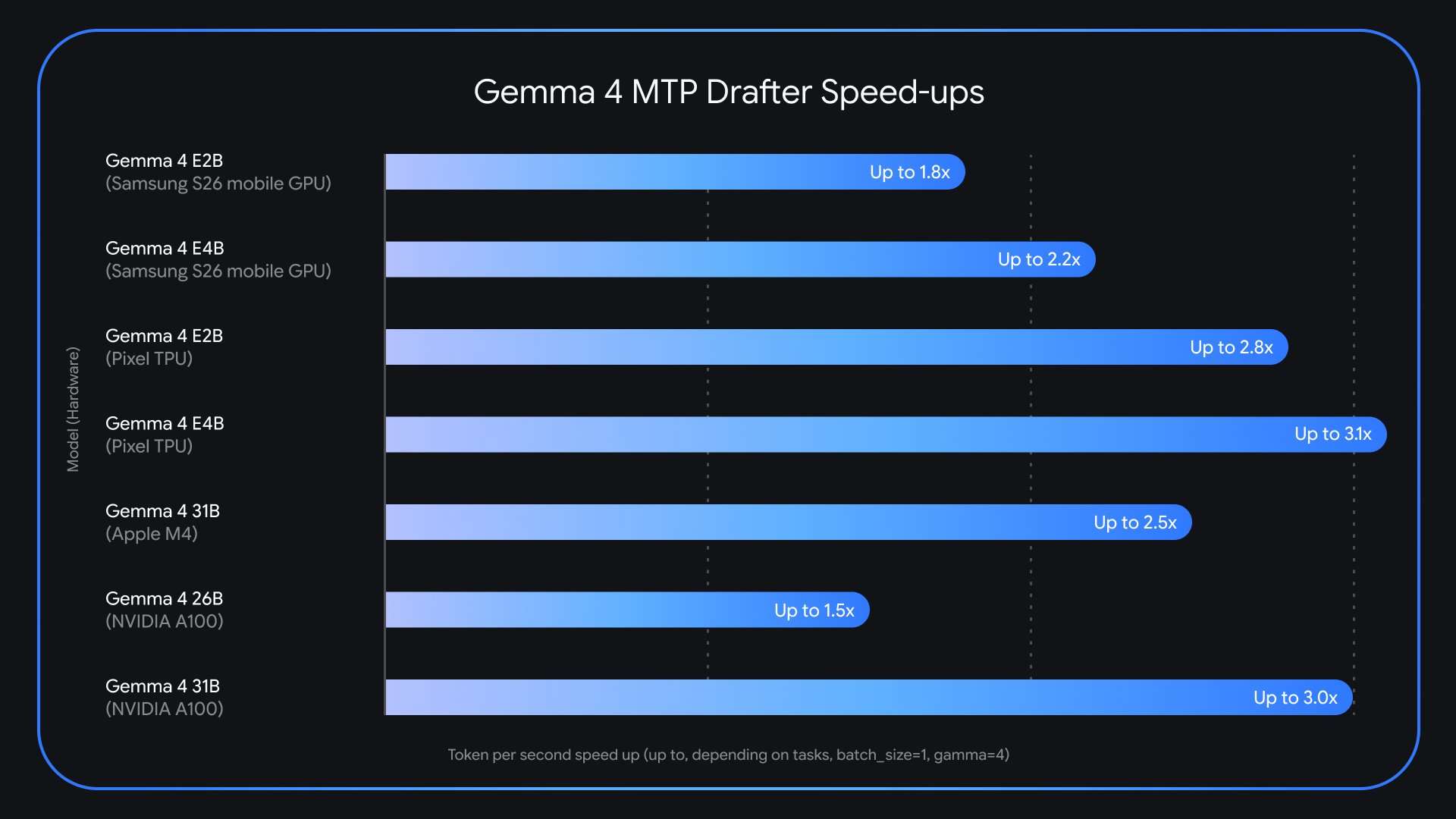
Google AI Releases Multi-Token Prediction (MTP) Drafters for Gemma 4: Delivering Up to 3x Faster Inference Without Quality Loss
MarkTechPost
When Claude Hallucinates in Court: The Latham & Watkins Incident and What It Means for Attorney Liability
MarkTechPost
Solidity LM surpasses Opus
Reddit r/LocalLLaMA


