
WildFireVQA: A Large-Scale Radiometric Thermal VQA Benchmark for Aerial Wildfire Monitoring
arXiv cs.CV / 4/23/2026
📰 NewsDeveloper Stack & InfrastructureSignals & Early TrendsModels & Research
Key Points
- WildFireVQA is a new large-scale benchmark for aerial wildfire monitoring that evaluates multimodal visual question answering grounded in radiometric thermal measurements, combining RGB and thermal data.
- The dataset includes 6,097 RGB-thermal samples (with an RGB image, color-mapped thermal visualization, and radiometric thermal TIFF) paired with 34 multiple-choice questions each, totaling 207,298 questions across multiple wildfire-relevant task types.
- To improve annotation reliability, the project uses multimodal LLM-based answer generation alongside sensor-driven deterministic labeling, manual verification, and consistency checks within and across frames.
- The paper introduces a comprehensive evaluation protocol for representative MLLMs across RGB, Thermal, and retrieval-augmented settings using radiometric thermal statistics, and finds RGB is currently the strongest modality for most models.
- Results indicate that adding retrieved thermal context can improve stronger MLLMs, while also exposing limitations of current MLLMs for safety-critical wildfire intelligence, and the dataset and code are open-sourced.
Related Articles

Big Tech firms are accelerating AI investments and integration, while regulators and companies focus on safety and responsible adoption.
Dev.to

Trajectory Forecasts in Unknown Environments Conditioned on Grid-Based Plans
Dev.to
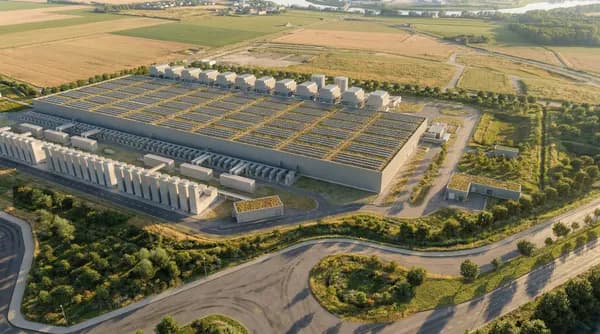
Elevating Austria: Google invests in its first data center in the Alps.
Google Blog

10 AI Tools Every Developer Should Try in 2026
Dev.to
OpenAI Just Named It Workspace Agents. We Open-Sourced Our Lark Version Six Months Ago
Dev.to


