
Knowledge Is Not Static: Order-Aware Hypergraph RAG for Language Models
arXiv cs.CL / 4/15/2026
💬 OpinionSignals & Early TrendsIdeas & Deep AnalysisModels & Research
Key Points
- The paper argues that common RAG methods treat retrieved evidence as an unordered set, which conflicts with real-world tasks where the order of interactions affects the answer.
- It proposes Order-Aware Knowledge Hypergraph RAG (OKH-RAG), which encodes higher-order interactions in a hypergraph together with learned precedence structure.
- OKH-RAG reformulates retrieval as sequence inference over hyperedges, aiming to recover coherent “interaction trajectories” rather than independent facts.
- A learned transition model infers precedence from data without explicit temporal supervision, enabling order-aware reasoning.
- Experiments on order-sensitive QA and explanation tasks (including tropical cyclone and port operations) show OKH-RAG outperforming permutation-invariant baselines, with ablations confirming the gains come from modeling interaction order.
Related Articles

Black Hat Asia
AI Business

The Complete Guide to Better Meeting Productivity with AI Note-Taking
Dev.to

5 Ways Real-Time AI Can Boost Your Sales Call Performance
Dev.to
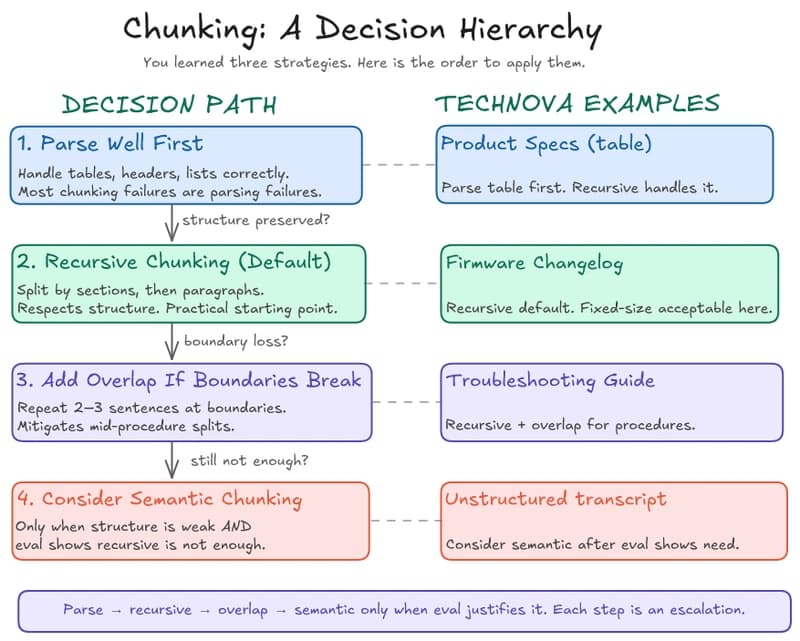
RAG in Practice — Part 4: Chunking, Retrieval, and the Decisions That Break RAG
Dev.to
Why dynamically routing multi-timescale advantages in PPO causes policy collapse (and a simple decoupled fix) [R]
Reddit r/MachineLearning


