
Distilling Human-Aligned Privacy Sensitivity Assessment from Large Language Models
arXiv cs.CL / 4/1/2026
💬 OpinionIdeas & Deep AnalysisModels & Research
Key Points
- The paper targets accurate privacy sensitivity assessment for text, noting that while LLMs can match human privacy judgments, they are too costly to run on sensitive data at scale.
- It proposes distilling the privacy-evaluation capability of Mistral Large 3 (675B) into much smaller encoder classifiers (down to ~150M parameters) to make privacy scoring more practical.
- Using a large, multi-domain dataset of privacy-annotated texts across 10 diverse domains, the authors train lightweight models that maintain strong agreement with human annotations.
- The approach is validated against human-labeled test data and is presented as a usable evaluation metric for de-identification systems, improving feasibility for real-world privacy workflows.
Related Articles

Show HN: 1-Bit Bonsai, the First Commercially Viable 1-Bit LLMs
Dev.to
I Built an AI Agent That Can Write Its Own Tools When It Gets Stuck
Dev.to

Agent Self-Discovery: How AI Agents Find Their Own Wallets
Dev.to
[P] Federated Adversarial Learning
Reddit r/MachineLearning
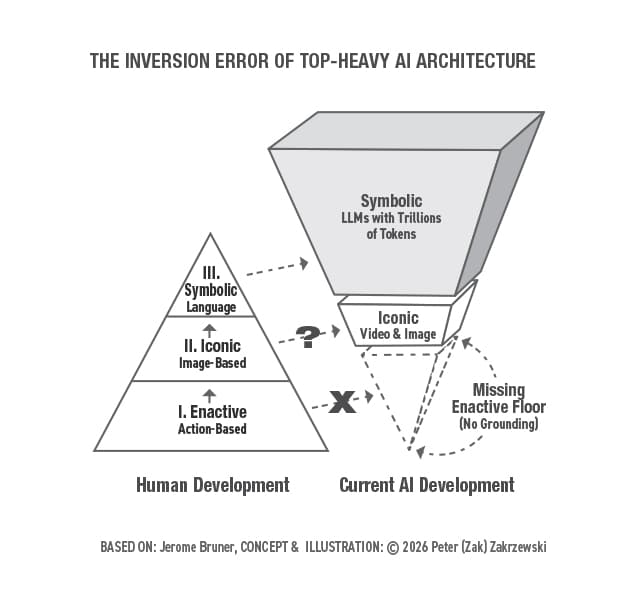
The Inversion Error: Why Safe AGI Requires an Enactive Floor and State-Space Reversibility
Towards Data Science


