
Formal Constraints on Dependency Syntax
arXiv cs.CL / 4/7/2026
💬 OpinionSignals & Early TrendsIdeas & Deep AnalysisModels & Research
Key Points
- Dependency syntax models sentences as dependency trees connecting lexical units with directed relations, but not all theoretically possible trees match attested language patterns.
- Because unconstrained dependency trees can be too permissive, researchers study formal constraints that better capture realistic syntax, improve parsing accuracy/speed, and support hypotheses about language evolution and human processing.
- Projectivity is a widely used constraint, but it can be too strict for flexible-word-order languages, motivating alternative or additional constraints.
- The work surveys and positions multiple proposed constraints as a “middle ground” between overly restrictive projectivity and fully unrestricted dependency structures.
- The paper is presented as a new arXiv announcement (arXiv:2604.04542v1), indicating an ongoing research effort rather than a deployed product or tool release.
Related Articles

Black Hat Asia
AI Business
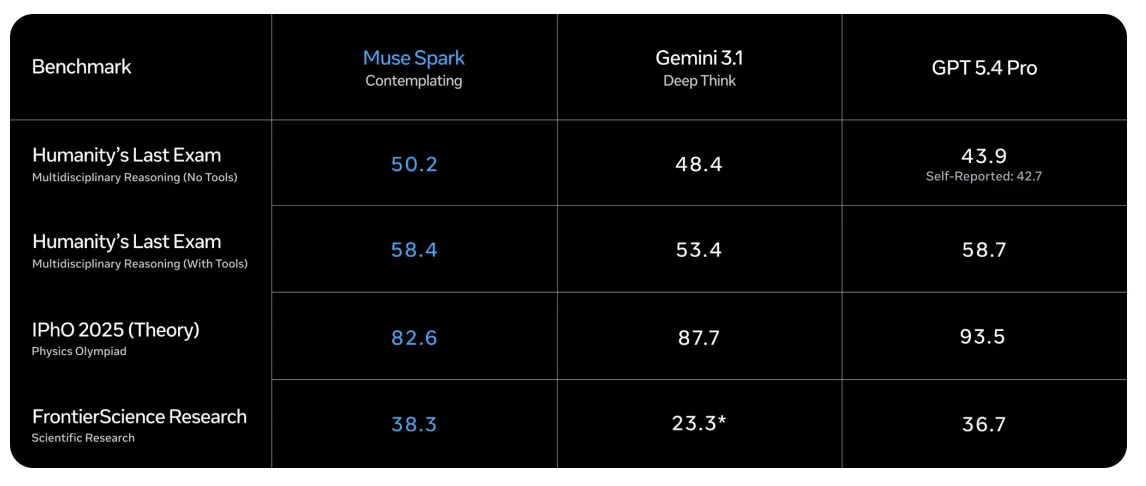
Meta Superintelligence Lab Releases Muse Spark: A Multimodal Reasoning Model With Thought Compression and Parallel Agents
MarkTechPost

Chatbots are great at manipulating people to buy stuff, Princeton boffins find
The Register
I tested and ranked every ai companion app I tried and here's my honest breakdown
Reddit r/artificial

Big Tech firms are accelerating AI investments and integration, while regulators and companies focus on safety and responsible adoption.
Dev.to


