
Generative models for decision-making under distributional shift
arXiv cs.LG / 4/7/2026
💬 OpinionIdeas & Deep AnalysisModels & Research
Key Points
- The tutorial argues that distributional shift in real deployments (e.g., shifted, context-dependent, partially observed, or stress-induced distributions) can be addressed by building decision-relevant distributions rather than relying only on a nominal historical estimate.
- It presents flow- and score-based generative models as mathematical tools for representing and transforming distributions via transport maps, velocity/score fields, guided stochastic dynamics, and pushforward/continuity formulations.
- The framework connects generative modeling to operations research concepts using Fokker–Planck equations, Wasserstein geometry, and optimization in probability space, enabling robust scenario construction.
- It shows how these generative models can learn nominal uncertainty, derive stressed or least-favorable distributions for robustness, and generate conditional/posterior distributions under side information and partial observation.
- The article highlights theoretical results and guarantees (e.g., convergence for iterative flow models, minimax analysis in transport-map space, and error-transfer bounds for posterior sampling with generative priors).
Related Articles

Big Tech firms are accelerating AI investments and integration, while regulators and companies focus on safety and responsible adoption.
Dev.to

Could it be that this take is not too far fetched?
Reddit r/LocalLLaMA
npm audit Is Broken — Here's the Claude Code Skill I Built to Fix It
Dev.to

Meta Launches Muse Spark: A New AI Model for Everyday Use
Dev.to
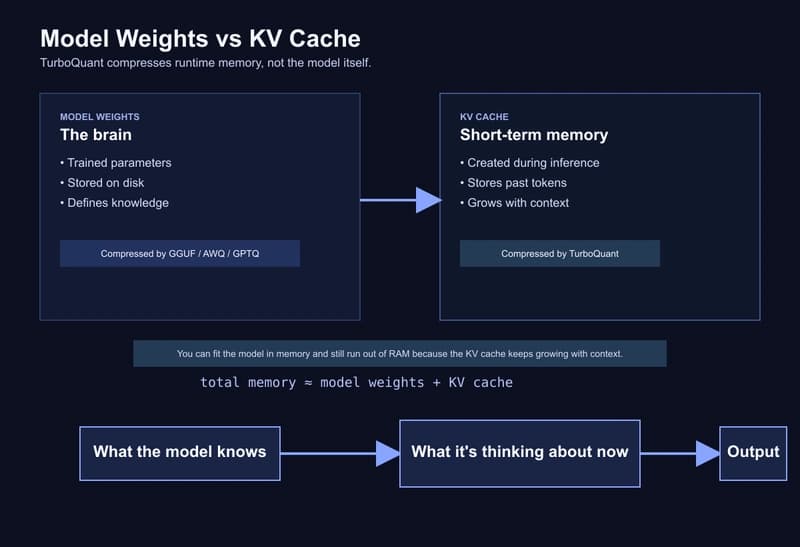
TurboQuant on a MacBook: building a one-command local stack with Ollama, MLX, and an automatic routing proxy
Dev.to


