
Ride the Wave: Precision-Allocated Sparse Attention for Smooth Video Generation
arXiv cs.CV / 4/15/2026
📰 NewsSignals & Early TrendsIdeas & Deep AnalysisModels & Research
Key Points
- The paper addresses the high computational cost of self-attention in Video Diffusion Transformers and argues that existing sparse-attention approaches can cause severe temporal flickering.
- It introduces Precision-Allocated Sparse Attention (PASA), a training-free framework that dynamically budgets compute based on curvature-aware profiling of acceleration across timesteps.
- PASA improves efficiency by using hardware-aligned grouped approximation instead of global homogenizing estimates, aiming to preserve local detail while maximizing throughput.
- The method also adds stochastic selection bias to attention routing to soften rigid boundaries and prevent selection oscillation that leads to localized compute starvation and flicker.
- Experiments on leading video diffusion models report substantial inference acceleration alongside smoother, structurally stable video generation sequences.
Related Articles

Black Hat Asia
AI Business

The Complete Guide to Better Meeting Productivity with AI Note-Taking
Dev.to

5 Ways Real-Time AI Can Boost Your Sales Call Performance
Dev.to
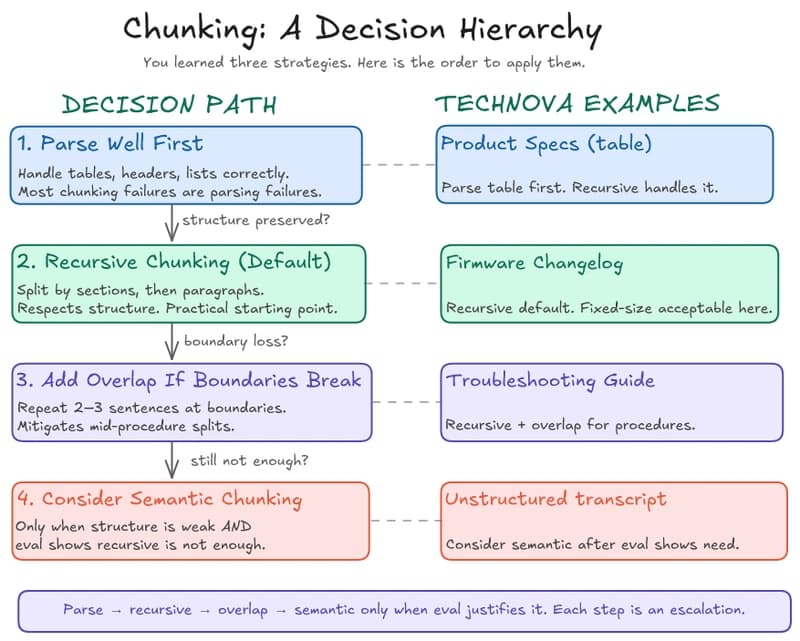
RAG in Practice — Part 4: Chunking, Retrieval, and the Decisions That Break RAG
Dev.to
Why dynamically routing multi-timescale advantages in PPO causes policy collapse (and a simple decoupled fix) [R]
Reddit r/MachineLearning


