
Grid-World Representations in Transformers Reflect Predictive Geometry
arXiv cs.LG / 3/18/2026
📰 NewsIdeas & Deep AnalysisModels & Research
Key Points
- The authors train decoder-only transformers on prefixes drawn from the exact distribution of constrained random walks and find that their hidden activations align with analytically derived sufficient vectors that encode optimal prediction.
- Across models and layers, the learned representations are often low-dimensional and closely track the world’s predictive vectors determined by position relative to the target and remaining time horizon.
- The work provides a concrete example where world-model-like representations emerge directly from the predictive geometry of the data, offering a lens to study how neural networks internalize structural constraints.
- Although demonstrated in a toy system, the findings suggest that geometric representations supporting optimal prediction may help explain how transformers encode grammatical and other structural constraints in more complex settings.
Related Articles
Day 10: 230 Sessions of Hustle and It Comes Down to One Person Reading a Document
Dev.to

5 Dangerous Lies Behind Viral AI Coding Demos That Break in Production
Dev.to
Two bots, one confused server: what Nimbus revealed about AI agent identity
Dev.to
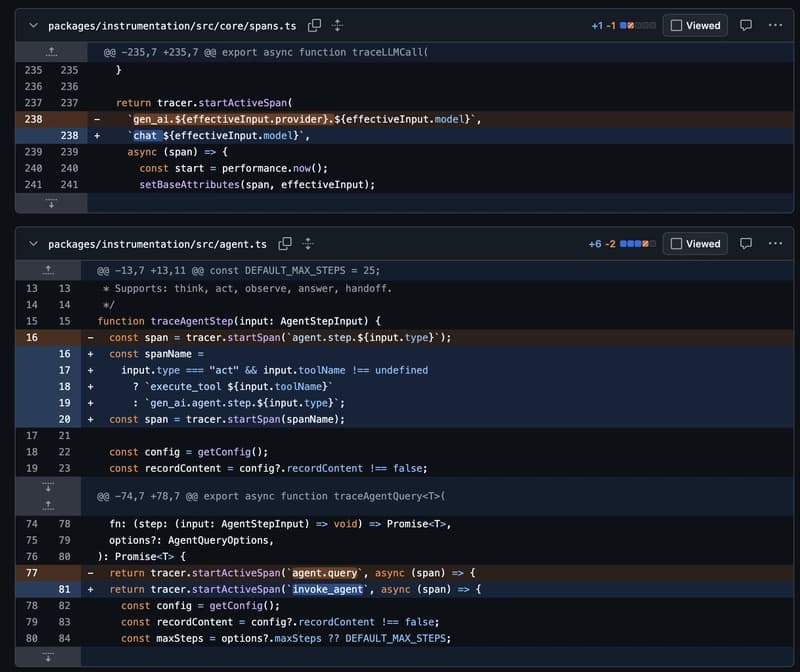
OpenTelemetry just standardized LLM tracing. Here's what it actually looks like in code.
Dev.to
PIXIU: A Large Language Model, Instruction Data and Evaluation Benchmark forFinance
Dev.to


