
Mechanistically Interpreting Compression in Vision-Language Models
arXiv cs.AI / 3/27/2026
💬 OpinionSignals & Early TrendsIdeas & Deep AnalysisModels & Research
Key Points
- The paper studies how common compression methods for vision-language models—specifically pruning and quantization—alter internal computation and safety behavior.
- Using causal circuit analysis and crosscoder-based feature comparisons, the authors find that pruning largely preserves circuit structure but rotates/attenuates internal features, while quantization changes circuits more broadly while keeping surviving features better aligned.
- The work introduces VLMSafe-420, a benchmark that matches harmful inputs with benign counterfactuals across multiple safety categories to enable more controlled evaluation.
- Results indicate that pruning can sharply reduce genuine refusal behavior, implying that compression choice has direct safety consequences for deployed VLMs.
広告
Related Articles

Got My 39-Agent System Audited Live. Here's What the Maturity Scorecard Revealed.
Dev.to

The Redline Economy
Dev.to

$500 GPU outperforms Claude Sonnet on coding benchmarks
Dev.to

From Scattershot to Sniper: AI for Hyper-Personalized Media Lists
Dev.to
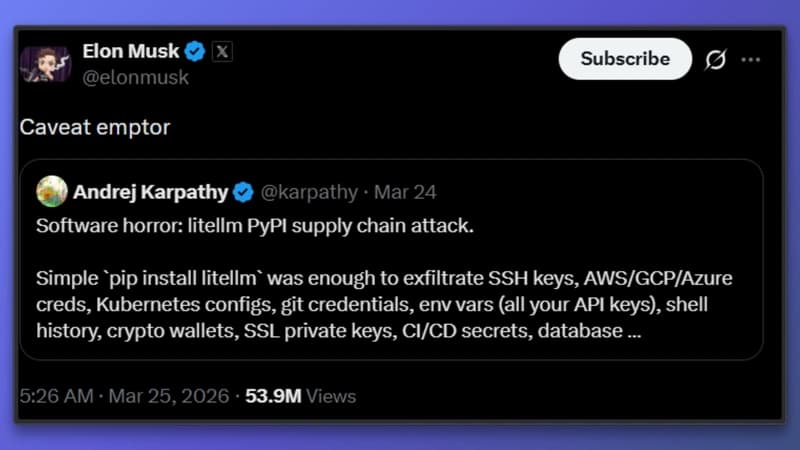
The LiteLLM Supply Chain Attack: A Wake-Up Call for AI Infrastructure
Dev.to


