
Uncertainty-Aware Foundation Models for Clinical Data
arXiv cs.LG / 4/7/2026
💬 OpinionIdeas & Deep AnalysisModels & Research
Key Points
- The paper proposes an uncertainty-aware framework for clinical foundation models that treats each patient as a distribution over latent physiologic states rather than a single deterministic embedding.
- It learns set-valued representations and enforces consistency across incomplete, irregular, and modality-dependent clinical observations to capture what is reliably inferable while explicitly encoding epistemic uncertainty.
- The approach combines multimodal encoders with scalable self-supervised objectives, including reconstruction, contrastive alignment, and distributional regularization.
- Experiments across multiple clinical tasks show improved predictive performance, better robustness to missing data, and improved uncertainty calibration versus strong baseline methods.
- The authors argue that explicitly modeling what is not observed (uncertainty) is an important inductive bias for healthcare foundation models trained on heterogeneous clinical data.
Related Articles
Research with ChatGPT
Dev.to
Silicon Valley is quietly running on Chinese open source models and almost nobody is talking about it
Reddit r/LocalLLaMA
Why AI Product Quality Is Now an Evaluation Pipeline Problem, Not a Model Problem
Dev.to
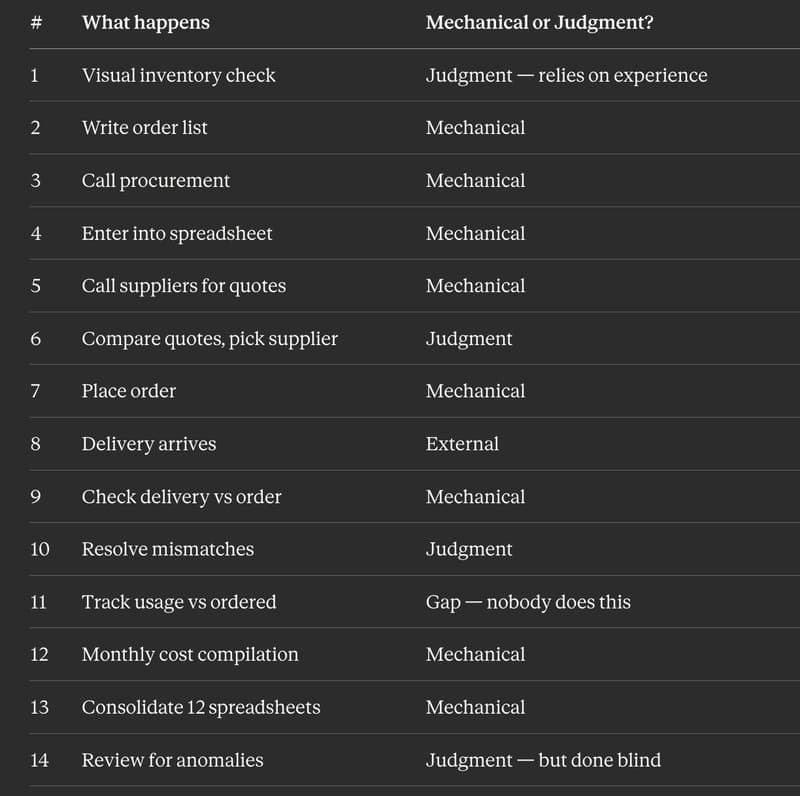
I Replaced 12 Kitchen Managers Guessing "How Much Chicken Do We Need" With 3 ML Models. Here's the Entire Architecture.
Dev.to

AI Model Router API - REST + MCP, Free Tier
Dev.to


