
Progressive Training for Explainable Citation-Grounded Dialogue: Reducing Hallucination to Zero in English-Hindi LLMs
arXiv cs.CL / 3/20/2026
📰 NewsIdeas & Deep AnalysisModels & Research
Key Points
- XKD-Dial proposes a progressive four-stage training pipeline for explainable, knowledge-grounded dialogue in bilingual English-Hindi settings with explicit citation grounding.
- The pipeline comprises multilingual adaptation, English dialogue SFT with citation grounding, bilingual dialogue SFT, and GRPO alignment with citation-aware rewards.
- The authors apply three post-hoc explainability analyses—cross-attention alignment, Integrated Gradients attribution, and occlusion-based causal grounding—to reveal how citation behavior is learned during training.
- Citation-grounded SFT reduces hallucination to 0.0% for encoder-decoder models from Stage 2 onward, and smaller models can match larger models on English after SFT.
- Across six models (250M-3B encoder-decoder and 1B-7B decoder-only) and six metrics (BLEU, ROUGE, BERTScore, FactScore, Citation-F1, and hallucination rate), the approach shows progressive gains and improved Hindi capabilities with limited forgetting.
Related Articles
Day 10: 230 Sessions of Hustle and It Comes Down to One Person Reading a Document
Dev.to

5 Dangerous Lies Behind Viral AI Coding Demos That Break in Production
Dev.to
Two bots, one confused server: what Nimbus revealed about AI agent identity
Dev.to
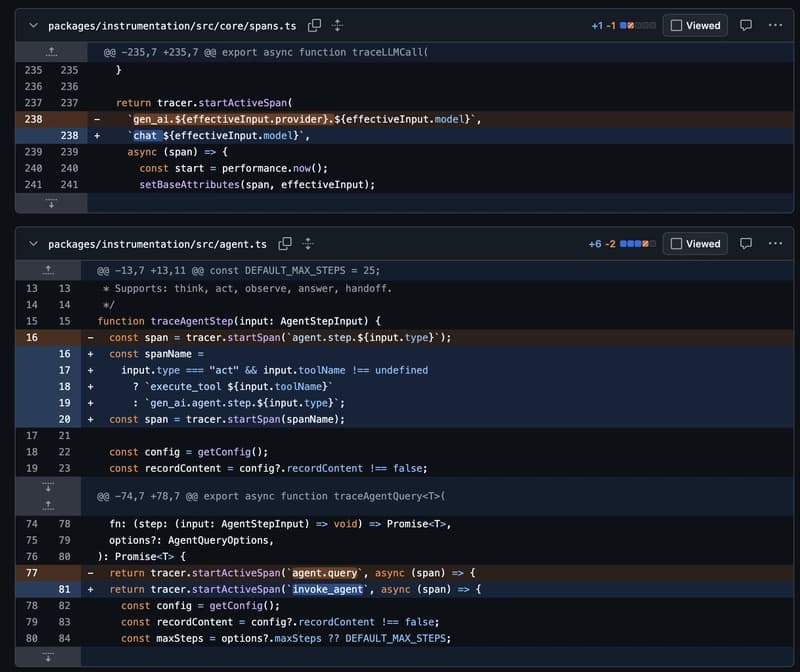
OpenTelemetry just standardized LLM tracing. Here's what it actually looks like in code.
Dev.to
PIXIU: A Large Language Model, Instruction Data and Evaluation Benchmark forFinance
Dev.to


