
Beyond Verifiable Rewards: Rubric-Based GRM for Reinforced Fine-Tuning SWE Agents
arXiv cs.LG / 4/21/2026
📰 NewsModels & Research
Key Points
- The paper argues that end-to-end fine-tuning for LLM-based SWE agents often depends on binary terminal rewards (e.g., unit tests passing), which offer little guidance for improving intermediate steps in multi-turn problem solving.
- It proposes a rubric-based Generative Reward Model (GRM) that uses human-designed rubrics to encourage or discourage specific behavioral patterns during interactions, generating denser learning signals than terminal-only feedback.
- The method collects higher-quality training data through trajectory filtration, leveraging the rubric-driven feedback to select more informative trajectories.
- In reinforced fine-tuning on SWE tasks, the rubric-based GRM with RFT outperforms terminal-score-only rejection sampling by better suppressing undesirable behaviors, promoting beneficial ones, and improving final unit test accuracy.
- The work is presented as an arXiv new announcement (arXiv:2604.16335v1), indicating a fresh research contribution rather than an incremental update to an existing product.
Related Articles
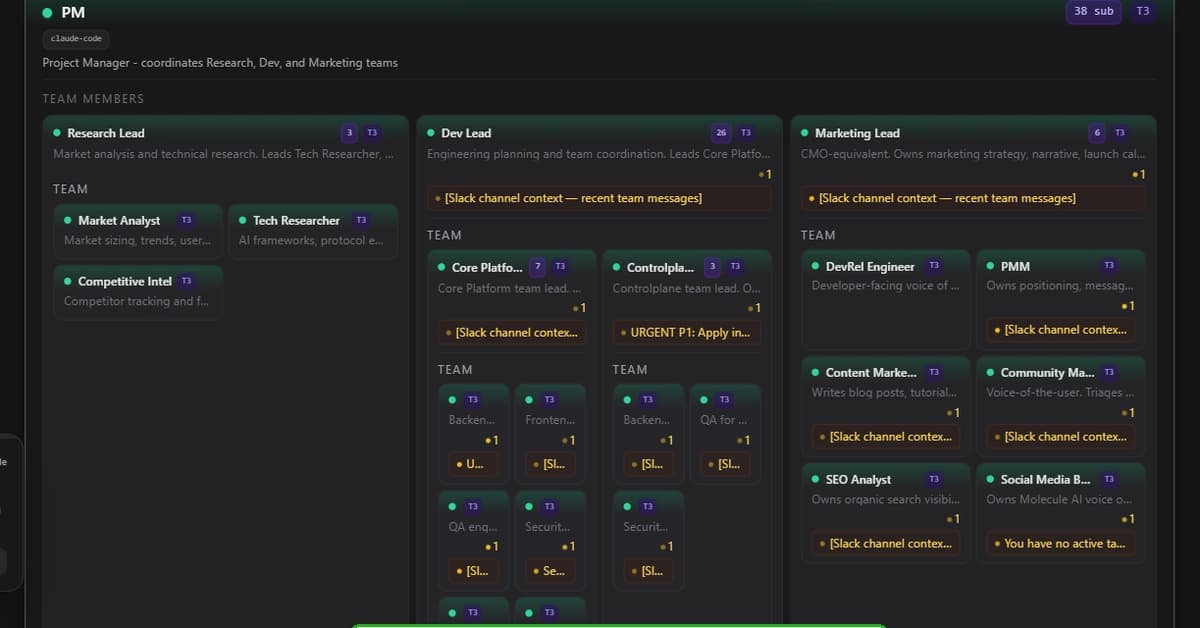
We built it during the NVIDIA DGX Spark Full-Stack AI Hackathon — and it ended up winning 1st place overall 🏆
Dev.to

Stop Losing Progress: Setting Up a Pro Jupyter Workflow in VS Code (No More Colab Timeouts!)
Dev.to
Building AgentOS: Why I’m Building the AWS Lambda for Insurance Claims
Dev.to

Where we are. In a year, everything has changed. Kimi - Minimax - Qwen - Gemma - GLM
Reddit r/LocalLLaMA
Where is Grok-2 Mini and Grok-3 (mini)?
Reddit r/LocalLLaMA


