
Momentum-Conserving Graph Neural Networks for Deformable Objects
arXiv cs.AI / 4/30/2026
💬 OpinionIdeas & Deep AnalysisModels & Research
Key Points
- The paper introduces MomentumGNN, a new graph neural network architecture tailored to model deformable objects while addressing a key limitation of prior GNNs: incorrect temporal evolution of linear and angular momentum.
- Instead of predicting unconstrained nodal accelerations, MomentumGNN predicts per-edge stretching and bending impulses, which are constructed to guarantee conservation of both linear and angular momentum.
- The model is trained in an unsupervised manner using a physics-based loss, aligning learning directly with physical constraints.
- Experiments on common momentum-critical scenarios show the proposed method outperforming existing baselines, demonstrating improved physical fidelity in dynamical predictions.
Related Articles

Can AI Predict Pollution Before It Happens? The Smart Solution to an Old Problem
Dev.to
THE FIFTH TRANSMISSION: THE GRADIENT IS THE GOVERNMENT
Reddit r/artificial
Looking for feedback on OpenVidya: an open-source AI classroom layer for NCERT/CBSE [R]
Reddit r/MachineLearning
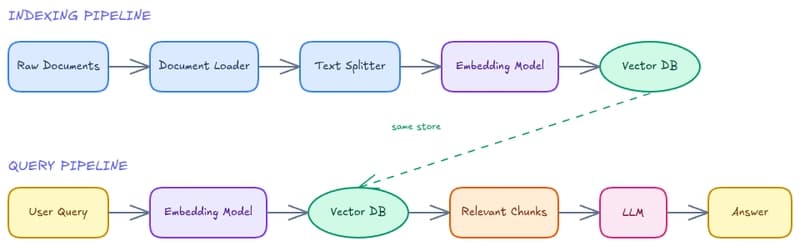
RAG Series (1): Why LLMs Need External Memory
Dev.to

One Open Source Project a Day (No. 54): Warp - The AI-Native Rust Terminal
Dev.to


