
If Only My CGM Could Speak: A Privacy-Preserving Agent for Question Answering over Continuous Glucose Data
arXiv cs.AI / 4/21/2026
📰 NewsDeveloper Stack & InfrastructureIdeas & Deep AnalysisModels & Research
Key Points
- The paper introduces CGM-Agent, a privacy-preserving framework that enables question answering over continuous glucose monitor (CGM) data rather than relying on static summaries.
- In the proposed architecture, an LLM acts only as a reasoning component to choose analytical functions, while all computation runs locally so that users’ health data never leaves their device.
- The authors create a benchmark of 4,180 questions using parameterized templates plus real user queries, with answers validated via deterministic program execution.
- Experiments with six leading LLMs show strong performance (94% value accuracy on synthetic queries and 88% on ambiguous real-world queries), with most errors caused by intent and temporal ambiguity.
- The results indicate that lightweight models can perform competitively within the agent design, and the team releases code and the benchmark to advance trustworthy health agents.
Related Articles

¿Hasta qué punto podría la IA reemplazarnos en nuestros trabajos? A veces creo que la gente exagera un poco.
Reddit r/artificial
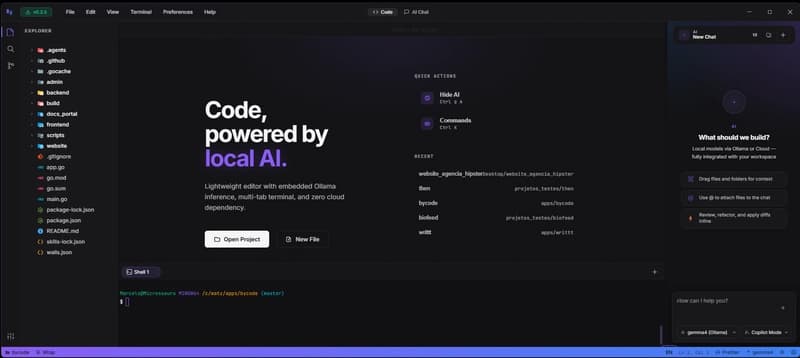
Why I Built byCode: A 100% Local, Privacy-First AI IDE
Dev.to

Magnificent irony as Meta staff unhappy about running surveillance software on work PCs
The Register
v0.21.1
Ollama Releases
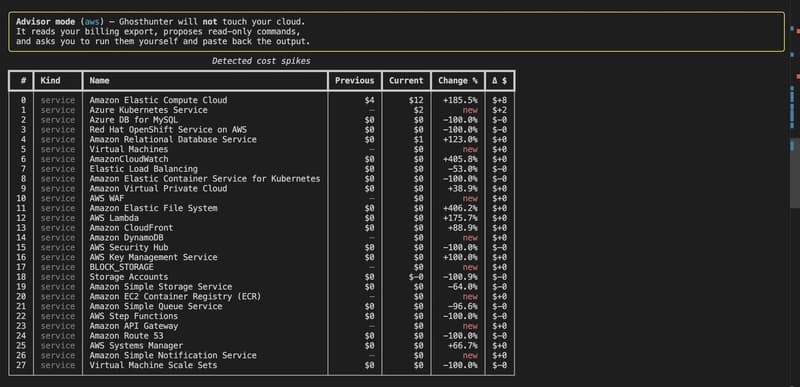
How I Built an AI Agent That Investigates Cloud Bill Spikes (Architecture Inside)
Dev.to


