
Refining Compositional Diffusion for Reliable Long-Horizon Planning
arXiv cs.RO / 5/6/2026
📰 NewsIdeas & Deep AnalysisModels & Research
Key Points
- Compositional diffusion planning can produce long-horizon trajectories by stitching short-horizon segments, but it often fails under multimodal local distributions due to mode-averaging that yields infeasible or incoherent plans.
- The paper introduces Refining Compositional Diffusion (RCD), a training-free guidance approach that steers compositional sampling toward globally coherent, high-density trajectories.
- RCD uses a pretrained diffusion model’s self-reconstruction error as a proxy for the log-density of composed plans and adds an overlap consistency term to enforce agreement at segment boundaries.
- Experiments on difficult long-horizon benchmarks from OGBench (locomotion, object manipulation, and pixel-based observations) show that RCD outperforms existing compositional methods and reduces mode-averaging effects.
Related Articles

Top 10 Free AI Tools for Students in 2026: The Ultimate Study Guide
Dev.to

AI as Your Contingency Co-Pilot: Automating Wedding Day 'What-Ifs'
Dev.to
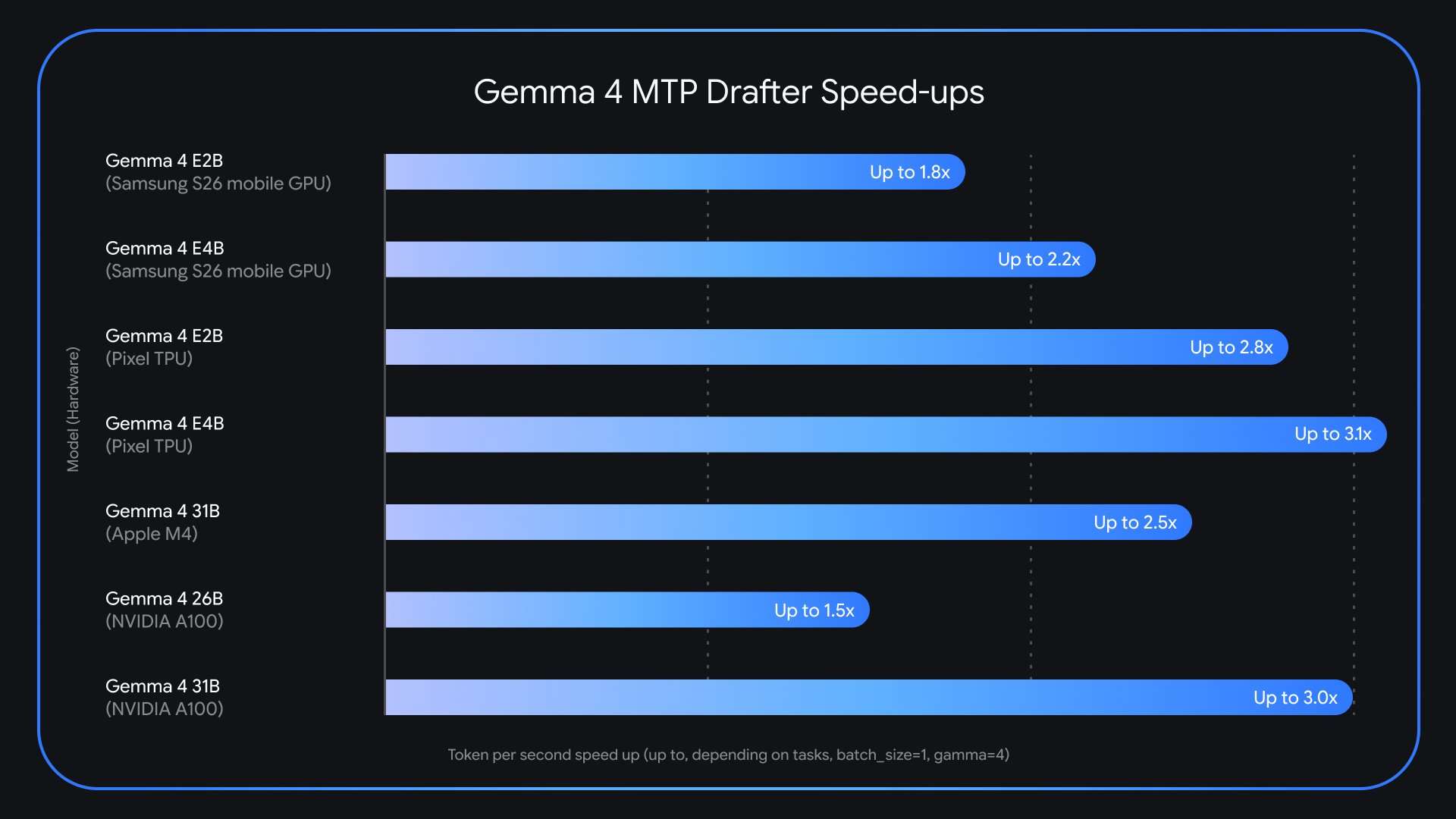
Google AI Releases Multi-Token Prediction (MTP) Drafters for Gemma 4: Delivering Up to 3x Faster Inference Without Quality Loss
MarkTechPost
When Claude Hallucinates in Court: The Latham & Watkins Incident and What It Means for Attorney Liability
MarkTechPost
Solidity LM surpasses Opus
Reddit r/LocalLLaMA


