
Associativity-Peakiness Metric for Contingency Tables
arXiv cs.LG / 4/27/2026
📰 NewsIdeas & Deep AnalysisModels & Research
Key Points
- The paper introduces the Associativity Peakiness (AP) metric to evaluate clustering performance when results are represented as contingency tables.
- It argues that existing metrics for vector-based truth/prediction pairs do not capture the detailed structural features visible in contingency tables.
- The AP metric is presented as an analogue to confusion-matrix quality measures used in supervised learning.
- Simulation results using 500 generated contingency tables across multiple scenarios indicate AP provides higher dynamic range than publicly available metrics.
- The authors also report that AP is more computationally efficient than comparable existing metrics for this evaluation setting.
Related Articles

Big Tech firms are accelerating AI investments and integration, while regulators and companies focus on safety and responsible adoption.
Dev.to
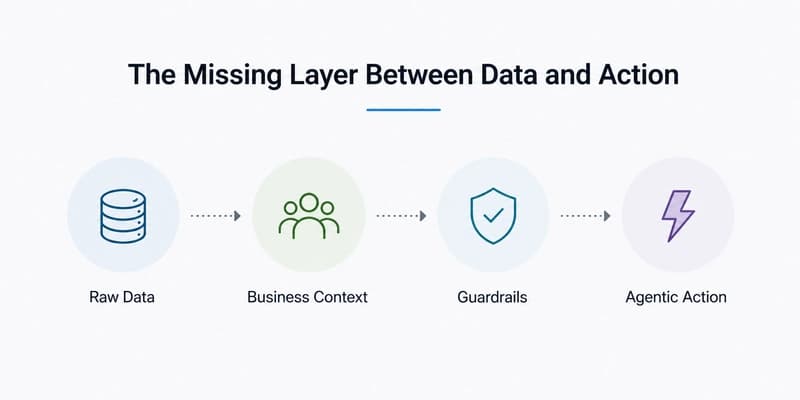
Everyone Wants AI Agents. Fewer Teams Are Ready for the Messy Business Context Behind Them
Dev.to
AI 编程工具对比 2026:Claude Code vs Cursor vs Gemini CLI vs Codex
Dev.to

How I Improved My YouTube Shorts and Podcast Audio Workflow with AI Tools
Dev.to

An improvement of the convergence proof of the ADAM-Optimizer
Dev.to


