
Can an Actor-Critic Optimization Framework Improve Analog Design Optimization?
arXiv cs.LG / 3/27/2026
💬 OpinionSignals & Early TrendsIdeas & Deep AnalysisModels & Research
Key Points
- The paper proposes an actor-critic optimization framework (ACOF) for analog circuit sizing that injects designer-like guidance into simulator-based search rather than treating optimization as a fully black-box problem.
- ACOF separates an actor that proposes promising regions of the design space from a critic that evaluates proposals, enforces design legality, and redirects the search when progress stalls.
- The approach is designed to remain compatible with standard simulator-based EDA workflows while improving stability and interpretability of the optimization process.
- Experiments on multiple test circuits show an average 38.9% improvement in the top-10 figure of merit over the strongest baseline and a 24.7% average reduction in regret, with reported peak gains up to 70.5% FoM and 42.2% lower regret on individual circuits.
- Overall, the authors argue that combining iterative “reasoning” (via actor-critic roles) with simulation-driven evaluation yields a more transparent path to automated analog sizing in large, difficult search spaces.
広告
Related Articles

Got My 39-Agent System Audited Live. Here's What the Maturity Scorecard Revealed.
Dev.to

The Redline Economy
Dev.to

$500 GPU outperforms Claude Sonnet on coding benchmarks
Dev.to

From Scattershot to Sniper: AI for Hyper-Personalized Media Lists
Dev.to
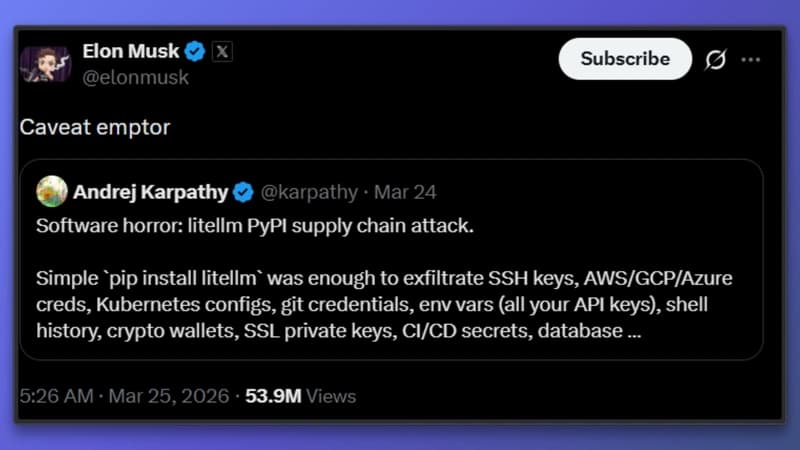
The LiteLLM Supply Chain Attack: A Wake-Up Call for AI Infrastructure
Dev.to


