
MS-SSE-Net: A Multi-Scale Spatial Squeeze-and-Excitation Network for Structural Damage Detection in Civil and Geotechnical Engineering
arXiv cs.CV / 4/17/2026
📰 NewsModels & Research
Key Points
- The paper introduces MS-SSE-Net, a deep learning model for classifying structural damage in civil and geotechnical images despite variations in damage patterns and environmental conditions.
- MS-SSE-Net builds on a DenseNet201 backbone while adding multi-scale feature extraction using parallel depthwise convolutions plus channel attention (squeeze-and-excitation) and spatial attention to focus on informative regions.
- The network refines learned features through global average pooling followed by a fully connected layer to produce final damage predictions.
- Experiments on the StructDamage dataset covering multiple damage categories show notably higher performance than the DenseNet201 baseline and other comparison methods, with reported metrics around 99.25–99.31%.
- Overall results indicate that the combination of multi-scale representations and attention mechanisms improves both precision/recall balance and classification accuracy for structural damage detection.
Related Articles
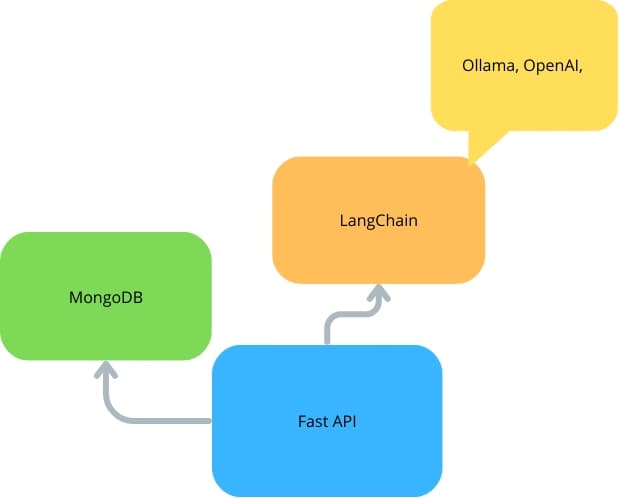
FastAPI With LangChain and MongoDB
Dev.to
![[2026] OpenTelemetry for LLM Observability — Self-Hosted Setup](/_next/image?url=https%3A%2F%2Fmedia2.dev.to%2Fdynamic%2Fimage%2Fwidth%3D1200%2Cheight%3D627%2Cfit%3Dcover%2Cgravity%3Dauto%2Cformat%3Dauto%2Fhttps%253A%252F%252Fdev-to-uploads.s3.amazonaws.com%252Fuploads%252Farticles%252Flu4b6ttuhur71z5gemm0.png&w=3840&q=75)
[2026] OpenTelemetry for LLM Observability — Self-Hosted Setup
Dev.to

The AI Education Product on Product Hunt Worth Watching
Dev.to

The joy and pain of training an LLM from scratch
Reddit r/LocalLLaMA

Did you know that you can use Qwen3.5-35B-A3B-Base as an instruction/reasoning Model?
Reddit r/LocalLLaMA


