
An analysis of sensor selection for fruit picking with suction-based grippers
arXiv cs.LG / 4/29/2026
💬 OpinionDeveloper Stack & InfrastructureModels & Research
Key Points
- The paper addresses why robotic fruit harvesting struggles to reliably determine whether a fruit was successfully picked, which affects efficiency and increases crop damage.
- It proposes and evaluates a phase-dependent, multimodal sensing suite integrated into a compliant, suction-based apple gripper to detect pick success, failures, and slip events.
- The research identifies which sensors are most informative at different stages of the picking process, aiming to improve accuracy while reducing sensor redundancy.
- Experiments in a real apple orchard show over 90% accuracy for detecting successful picks and impending failures using Random Forest and MLP classifiers.
- The Random Forest model can predict pick/slip events within 0.09 seconds of human-annotated ground truth, enabling earlier failure detection than would be possible with fixed sensing strategies.
Related Articles
LLMs will be a commodity
Reddit r/artificial

What it feels like to have to have Qwen 3.6 or Gemma 4 running locally
Reddit r/LocalLLaMA
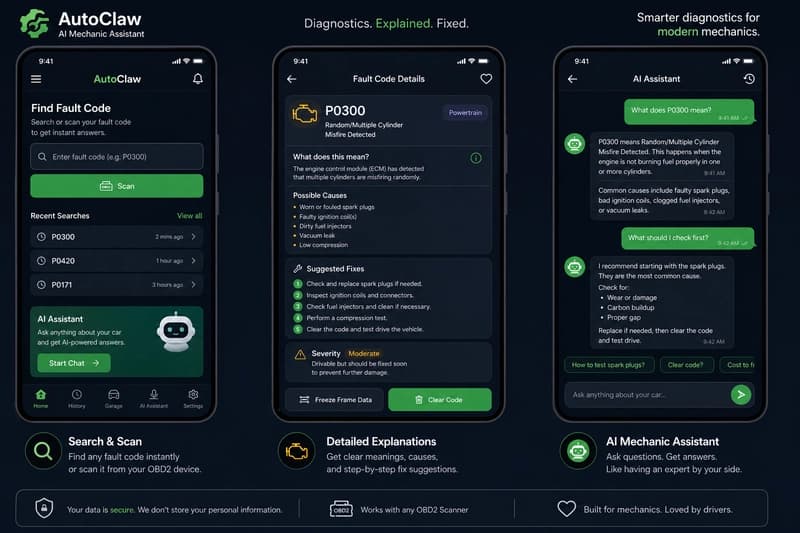
From Fault Codes to Smart Fixes: How Google Cloud NEXT ’26 Inspired My AI Mechanic Assistant
Dev.to

Dex lands $5.3M to grow its AI-driven talent matching platform
Tech.eu

7 OpenClaw Money-Making Cases in One Week — and the Hidden Cost Problem Behind Them
Dev.to


