
Neuron-Anchored Rule Extraction for Large Language Models via Contrastive Hierarchical Ablation
arXiv cs.LG / 5/6/2026
📰 NewsDeveloper Stack & InfrastructureIdeas & Deep AnalysisModels & Research
Key Points
- The paper introduces MechaRule, an explainable-AI pipeline that extracts symbolic rules from LLMs while explicitly grounding those rules in the model’s internal neuron circuitry via “agonists.”
- MechaRule efficiently localizes sparse agonist neuron sets using a contrastive hierarchical ablation approach that treats neuron localization as adaptive group testing under an approximately monotone, saturating “overtopping” abstraction.
- The method relies on verifying ablation effects with data splits that closely match faithful rule behavior; it notes that spectral splits can work as a fallback but unfaithful splits harm localization quality.
- Experiments on arithmetic and jailbreak tasks across Qwen2 and GPT-J show MechaRule can recover 96.8% of high-effect agonists from brute-force comparisons, and ablating the localized agonists sharply reduces arithmetic accuracy and jailbreak success.
Related Articles

Top 10 Free AI Tools for Students in 2026: The Ultimate Study Guide
Dev.to

SIFS (SIFS Is Fast Search) - local code search for coding agents
Dev.to

AI as Your Contingency Co-Pilot: Automating Wedding Day 'What-Ifs'
Dev.to

BizNode's semantic memory (Qdrant) makes your bot smarter over time — it remembers past conversations and answers...
Dev.to
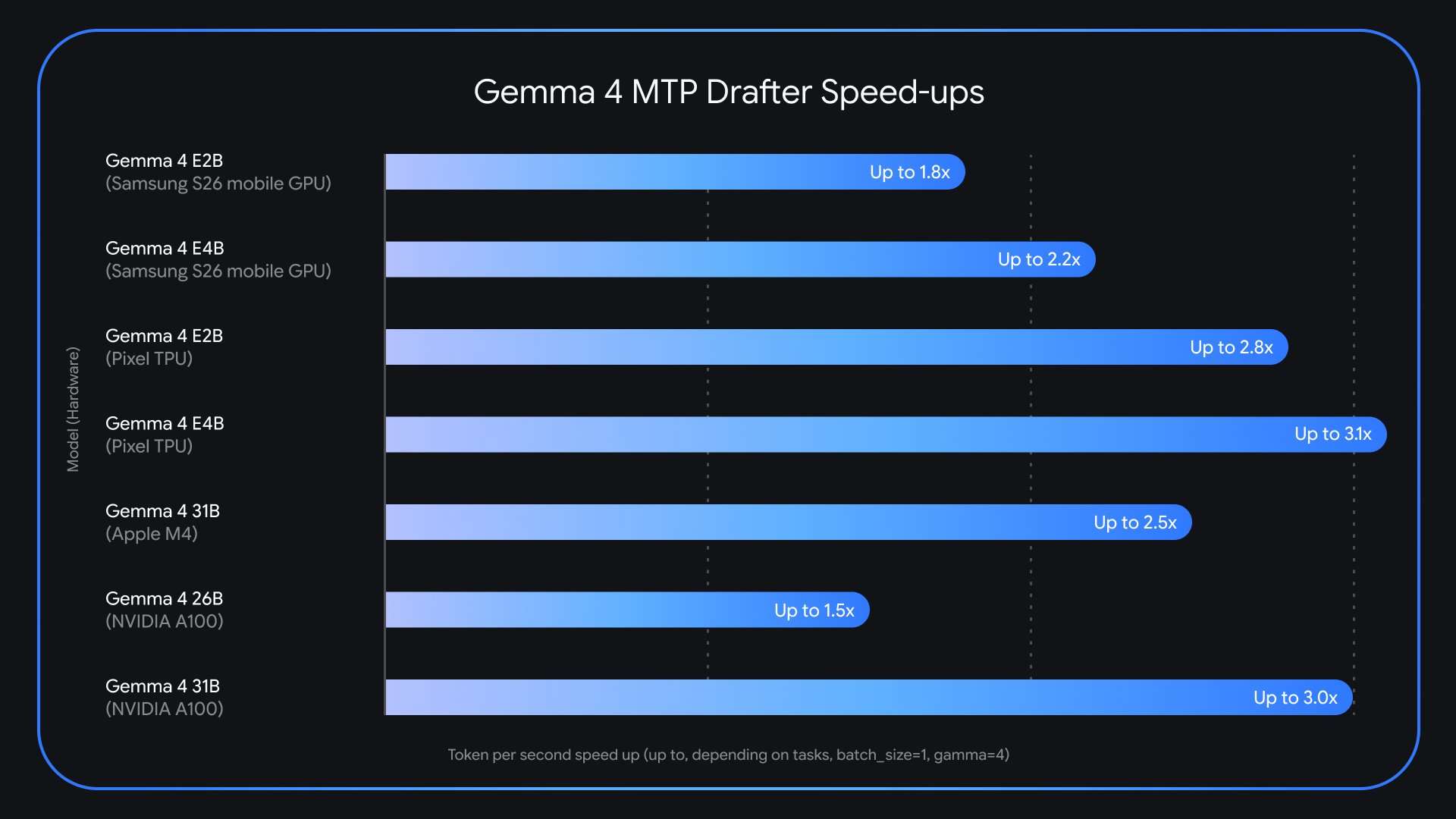
Google AI Releases Multi-Token Prediction (MTP) Drafters for Gemma 4: Delivering Up to 3x Faster Inference Without Quality Loss
MarkTechPost


