
Dual-Imbalance Continual Learning for Real-World Food Recognition
arXiv cs.CV / 4/1/2026
💬 OpinionIdeas & Deep AnalysisModels & Research
Key Points
- The paper introduces DIME, a continual learning method for real-world food recognition that explicitly handles “dual imbalance” from both long-tailed class frequencies and uneven numbers of newly introduced categories at each step.
- DIME uses parameter-efficient fine-tuning to learn lightweight per-task adapters and then progressively merges them using a class-count guided spectral merging strategy.
- A rank-wise threshold modulation mechanism is proposed to stabilize adapter merging by retaining dominant knowledge while enabling adaptive updates.
- The approach outputs a single merged adapter for inference, aiming to keep deployment efficient without maintaining task-specific modules.
- Experiments on realistic long-tailed food benchmarks under a step-imbalanced protocol show DIME improves by more than 3% over prior strong continual learning baselines, with code released on GitHub.
Related Articles

Show HN: 1-Bit Bonsai, the First Commercially Viable 1-Bit LLMs
Dev.to
I Built an AI Agent That Can Write Its Own Tools When It Gets Stuck
Dev.to

Agent Self-Discovery: How AI Agents Find Their Own Wallets
Dev.to
[P] Federated Adversarial Learning
Reddit r/MachineLearning
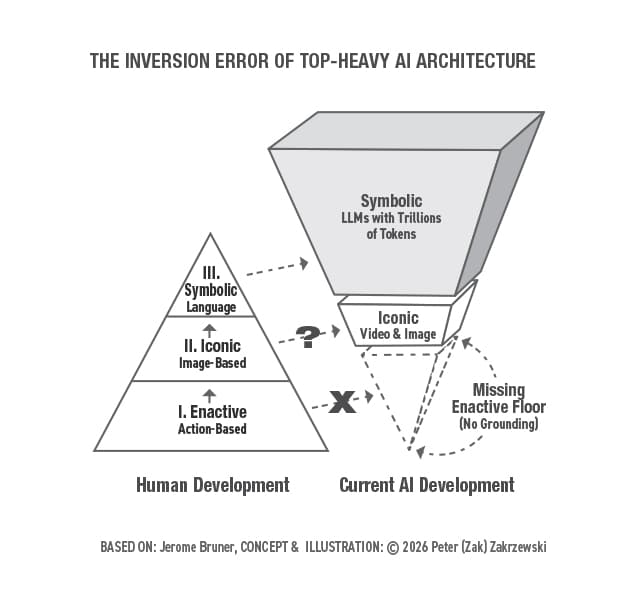
The Inversion Error: Why Safe AGI Requires an Enactive Floor and State-Space Reversibility
Towards Data Science


