
Controllable Video Object Insertion via Multiview Priors
arXiv cs.CV / 4/17/2026
📰 NewsModels & Research
Key Points
- The paper addresses the video object insertion problem, focusing on maintaining consistent object identity, correct spatial alignment, and temporal coherence when adding new objects into existing videos.
- It proposes a method that lifts 2D reference images into multi-view representations and uses a dual-path view-consistent conditioning mechanism to improve appearance stability across viewpoints.
- To better handle real-world imperfections, the framework includes a quality-aware weighting scheme that down-weights noisy or unreliable inputs.
- The work introduces an Integration-Aware Consistency Module designed to improve spatial realism, explicitly reducing occlusion and boundary artifacts while preserving continuity across frames.
- Experiments report significant improvements in the visual quality and realism of inserted objects, with more stable integration overall.
Related Articles
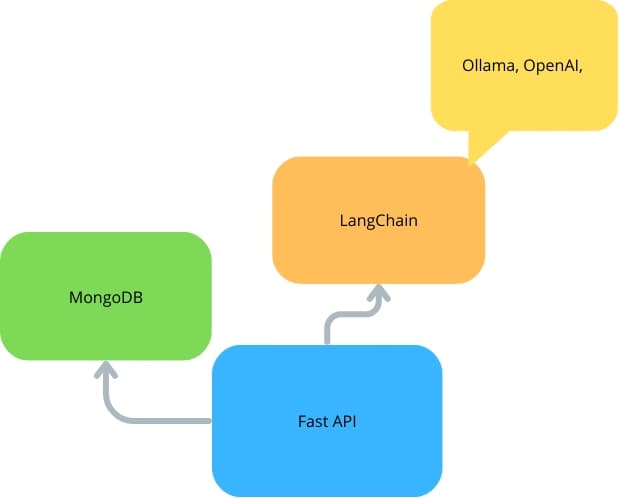
FastAPI With LangChain and MongoDB
Dev.to
![[2026] OpenTelemetry for LLM Observability — Self-Hosted Setup](/_next/image?url=https%3A%2F%2Fmedia2.dev.to%2Fdynamic%2Fimage%2Fwidth%3D1200%2Cheight%3D627%2Cfit%3Dcover%2Cgravity%3Dauto%2Cformat%3Dauto%2Fhttps%253A%252F%252Fdev-to-uploads.s3.amazonaws.com%252Fuploads%252Farticles%252Flu4b6ttuhur71z5gemm0.png&w=3840&q=75)
[2026] OpenTelemetry for LLM Observability — Self-Hosted Setup
Dev.to

The AI Education Product on Product Hunt Worth Watching
Dev.to

The joy and pain of training an LLM from scratch
Reddit r/LocalLLaMA

Did you know that you can use Qwen3.5-35B-A3B-Base as an instruction/reasoning Model?
Reddit r/LocalLLaMA


