
Unsupervised Multi-agent and Single-agent Perception from Cooperative Views
arXiv cs.CV / 4/8/2026
📰 NewsSignals & Early TrendsIdeas & Deep AnalysisModels & Research
Key Points
- The paper addresses a gap in LiDAR perception by proposing an unsupervised framework that can jointly handle multi-agent and single-agent 3D perception without human annotations.
- It identifies two core benefits of cooperative sensor sharing: denser point clouds from multiple agents improve unsupervised object classification, and multi-agent cooperative views can provide unsupervised guidance for single-view 3D object detection.
- The proposed UMS framework uses a Proposal Purifying Filter to refine candidate proposals after density cooperation, a Progressive Proposal Stabilizing module to generate reliable pseudo-labels via easy-to-hard curriculum learning, and Cross-View Consensus Learning to transfer cooperative guidance to single-agent detection.
- Experiments on V2V4Real and OPV2V show UMS achieves significantly better 3D detection performance than prior state-of-the-art methods in an unsupervised setting for both perception settings.
- Overall, the work suggests that cross-agent communication plus consensus learning can reduce reliance on labeled data for real-world robotic and automated-vehicle perception pipelines.
Related Articles

Black Hat Asia
AI Business

The enforcement gap: why finding issues was never the problem
Dev.to
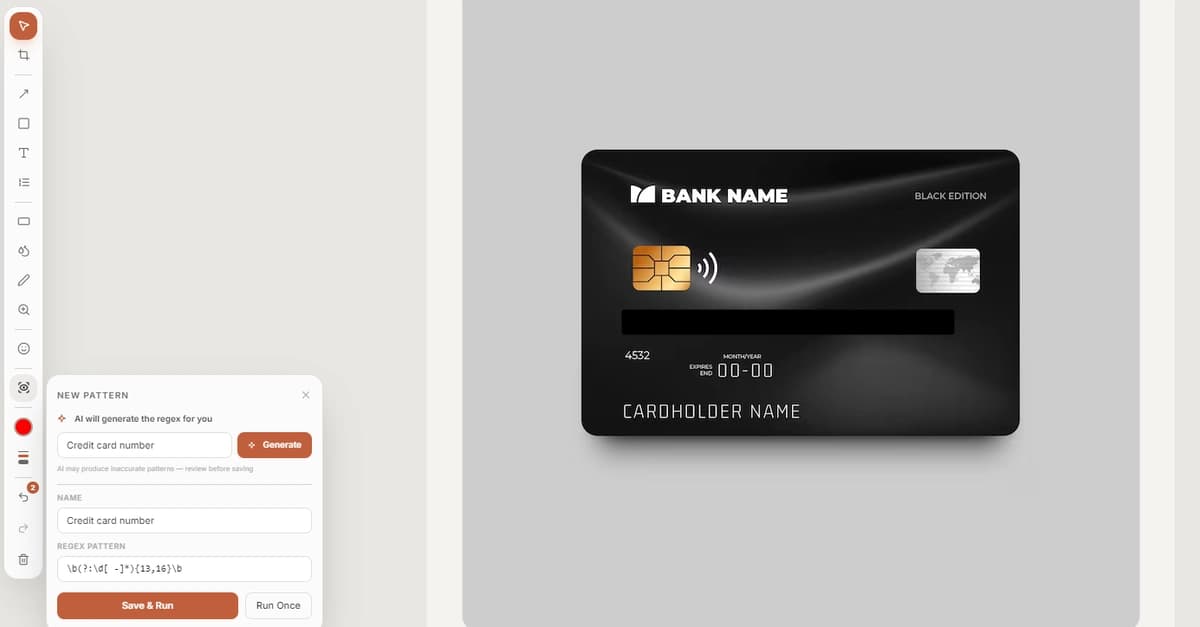
How I Built AI-Powered Auto-Redaction Into a Desktop Screenshot Tool
Dev.to

Agentic AI vs Traditional Automation: Why They Require Different Approaches in Modern Enterprises
Dev.to
Agentic AI vs Traditional Automation: Why Modern Enterprises Must Treat Them Differently
Dev.to


