
Robust Graph Representation Learning via Adaptive Spectral Contrast
arXiv cs.LG / 4/3/2026
💬 OpinionIdeas & Deep AnalysisModels & Research
Key Points
- The paper analyzes spectral graph contrastive learning and identifies a “spectral dilemma” where high-frequency components needed for heterophily also have higher variance under spectrally concentrated perturbations.
- It derives a regret lower bound proving that existing global (node-agnostic) spectral fusion strategies are provably sub-optimal on mixed graphs with different node-wise frequency preferences.
- To overcome this, the authors propose ASPECT, a reliability-aware spectral gating framework that uses node-wise gates to dynamically re-weight frequency channels.
- ASPECT is formulated as a minimax game with an adversary that targets spectral energy distributions using a Rayleigh quotient penalty to enforce spectrally robust, structurally discriminative representations.
- Experiments indicate ASPECT achieves new state-of-the-art results on 8 of 9 benchmarks while decoupling structural heterophily from incidental noise.
Related Articles

90000 Tech Workers Got Fired This Year and Everyone Is Blaming AI but Thats Not the Whole Story
Dev.to

Microsoft’s $10 Billion Japan Bet Shows the Next AI Battleground Is National Infrastructure
Dev.to
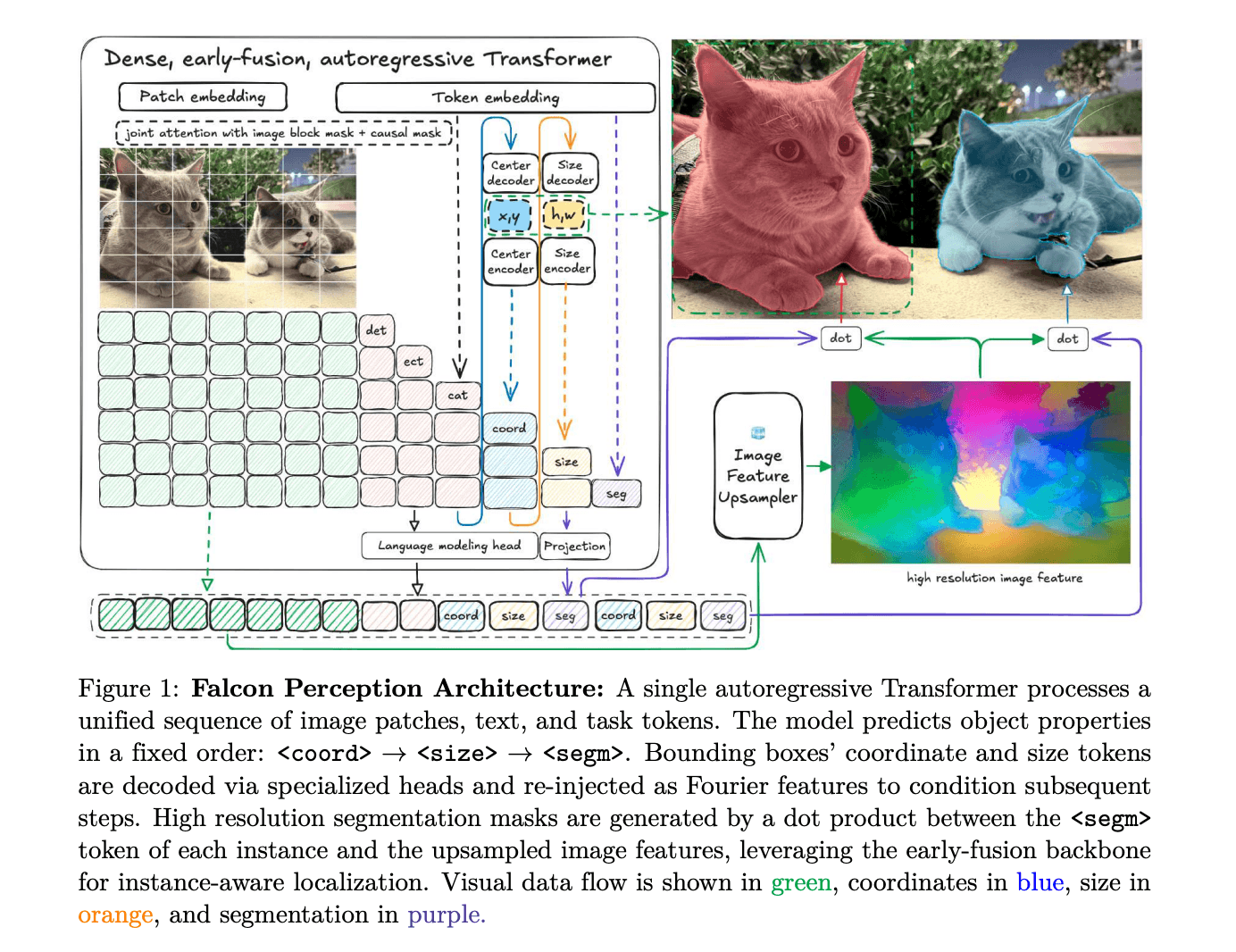
TII Releases Falcon Perception: A 0.6B-Parameter Early-Fusion Transformer for Open-Vocabulary Grounding and Segmentation from Natural Language Prompts
MarkTechPost
The house asked me a question
Dev.to

Precision Clip Selection: How AI Suggests Your In and Out Points
Dev.to


