
Beyond Semantic Relevance: Counterfactual Risk Minimization for Robust Retrieval-Augmented Generation
arXiv cs.CL / 5/5/2026
📰 NewsModels & Research
Key Points
- Most existing RAG systems optimize retrieval for semantic relevance, but this can fail in decision-making contexts where user queries contain cognitive biases.
- The paper identifies a “Relevance-Robustness Gap,” where higher relevance can lead to retrieving sycophantic evidence that reinforces hallucinations.
- It introduces CoRM-RAG, which minimizes counterfactual risk by aligning retrieval with decision safety rather than similarity.
- Using causal intervention, the approach simulates cognitive biases via a Cognitive Perturbation Protocol during training and distills the result into a lightweight Evidence Critic for scoring.
- Experiments on decision benchmarks show CoRM-RAG outperforms strong dense retrievers and LLM rerankers under adversarial perturbations, including improved risk-aware abstention through robustness scoring.
Related Articles
Why Retail Chargeback Recovery Could Be AgentHansa's First Real PMF
Dev.to
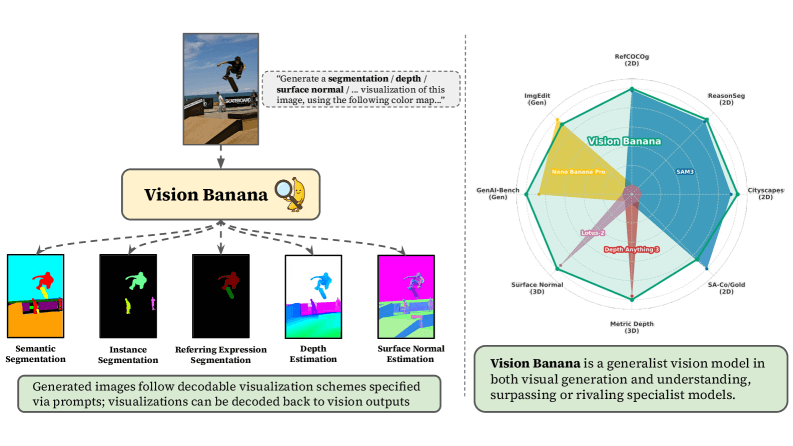
Last Week in AI #340 - OpenAI vs Musk + Microsoft, DeepSeek v4, Vision Banana
Last Week in AI

Trying to train tiny LLMs on length constrained reddit posts summarization task using GRPO on 3xMac Minis - updates!
Reddit r/LocalLLaMA

Uber Shares What Happens When 1.500 AI Agents Hit Production
Reddit r/artificial
vibevoice.cpp: Microsoft VibeVoice (TTS + long-form ASR with diarization) ported to ggml/C++, runs on CPU/CUDA/Metal/Vulkan, no Python at inference
Reddit r/LocalLLaMA


