
DynHD: Hallucination Detection for Diffusion Large Language Models via Denoising Dynamics Deviation Learning
arXiv cs.CL / 3/18/2026
📰 NewsSignals & Early TrendsIdeas & Deep AnalysisModels & Research
Key Points
- DynHD targets hallucination detection in diffusion-based LLMs by modeling both spatial (token sequence) and temporal (denoising dynamics) information.
- It introduces a semantic-aware evidence construction module to filter non-informative tokens and emphasize semantically meaningful signals.
- A reference evidence generator learns the expected evolution trajectory of uncertainty evidence during the diffusion process.
- A deviation-based detector measures the discrepancy between observed and reference uncertainty trajectories to identify hallucinations.
- Experiments show DynHD outperforms state-of-the-art baselines and offers higher efficiency across multiple benchmarks and backbone models.
Related Articles
Day 10: 230 Sessions of Hustle and It Comes Down to One Person Reading a Document
Dev.to

5 Dangerous Lies Behind Viral AI Coding Demos That Break in Production
Dev.to
Two bots, one confused server: what Nimbus revealed about AI agent identity
Dev.to
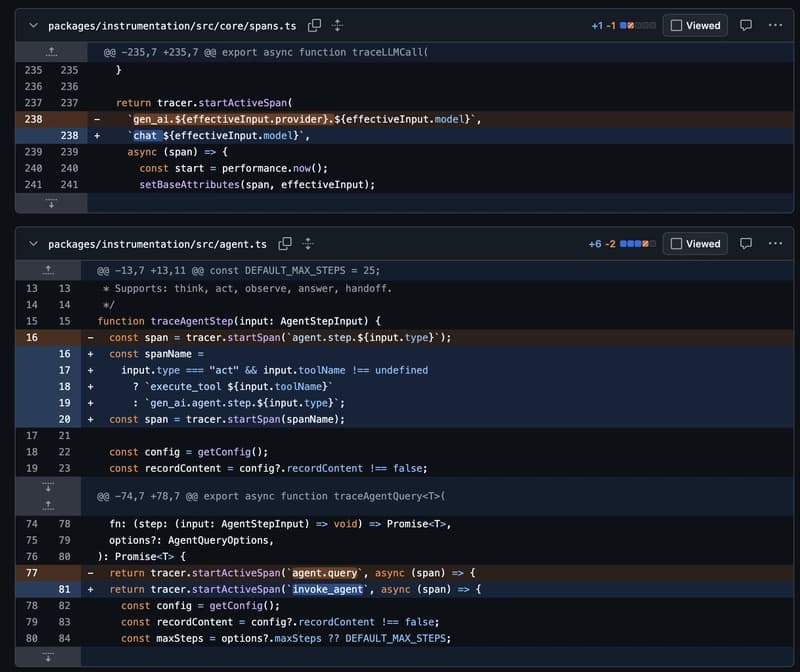
OpenTelemetry just standardized LLM tracing. Here's what it actually looks like in code.
Dev.to
PIXIU: A Large Language Model, Instruction Data and Evaluation Benchmark forFinance
Dev.to


