
ClawTrace: Cost-Aware Tracing for LLM Agent Skill Distillation
arXiv cs.AI / 4/28/2026
📰 NewsDeveloper Stack & InfrastructureSignals & Early TrendsIdeas & Deep AnalysisModels & Research
Key Points
- Skill-distillation methods for LLM agents can’t reliably decide whether to add or remove steps because they typically lack per-step cost signals tied to agent trajectories.
- The paper introduces ClawTrace, a tracing platform that records each LLM call, tool use, and sub-agent spawn, compiling them into a compact TraceCard (YAML) with per-step USD cost, token counts, and redundancy flags.
- It also presents CostCraft, a distillation pipeline that generates preserve, prune, and repair skill patches from TraceCards using counterfactual arguments and oracle-grounded evidence for failures.
- Experiments on 30 SpreadsheetBench tasks show that per-step cost attribution and prune patches each independently reduce quality regressions.
- Cross-benchmark tests on 30 unrelated SkillsBench tasks reveal that prune rules transfer well (cutting median cost by 32%), while preserve rules can cause regressions due to benchmark-specific conventions.
Related Articles
LLMs will be a commodity
Reddit r/artificial

Indian Developers: How to Build AI Side Income with $0 Capital in 2026
Dev.to

HubSpot Just Legitimized AEO: What It Means for Your Brand AI Visibility
Dev.to

What it feels like to have to have Qwen 3.6 or Gemma 4 running locally
Reddit r/LocalLLaMA
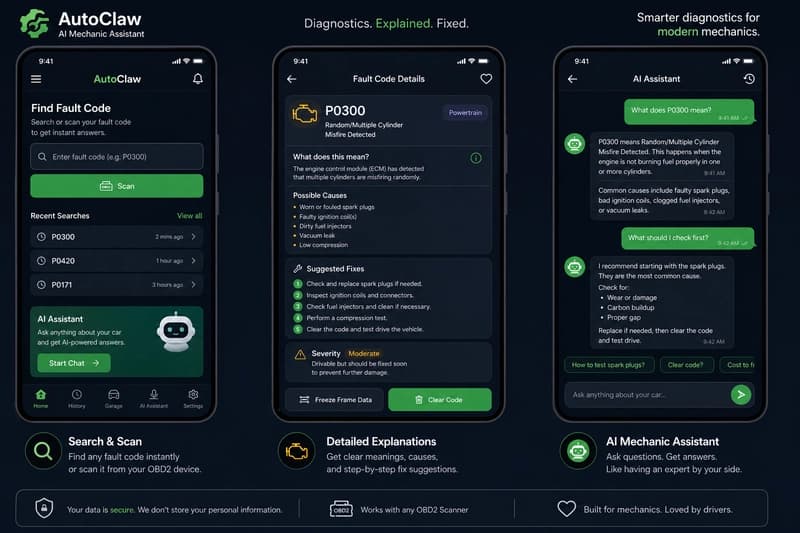
From Fault Codes to Smart Fixes: How Google Cloud NEXT ’26 Inspired My AI Mechanic Assistant
Dev.to


