
Rethinking the Comparison Unit in Sequence-Level Reinforcement Learning: An Equal-Length Paired Training Framework from Loss Correction to Sample Construction
arXiv cs.LG / 4/21/2026
📰 NewsModels & Research
Key Points
- The paper argues that length-related issues in sequence-level relative reinforcement learning persist because training comparison units are not inherently comparable, not merely due to loss scaling or normalization bias.
- It reframes the “length problem” as a comparison unit construction challenge and introduces a sample-construction-first training approach.
- The proposed framework proactively generates equal-length, alignable, and comparable training segments, avoiding reliance on post-hoc corrections for unequal-length responses.
- It presents EqLen, a method designed for group-relative comparison algorithms such as GRPO, GSPO, and RLOO, using techniques like dual-track synchronous generation, prefix inheritance, and segment masking to collect effective segments.
- The overall goal is to enable more stable training by ensuring that the compared responses during generation are properly aligned and comparable.
- Rethinking the Comparison Unit in Sequence-Level Reinforcement Learning: An Equal-Length Paired Training Framework from Loss Correction to Sample Construction
Related Articles
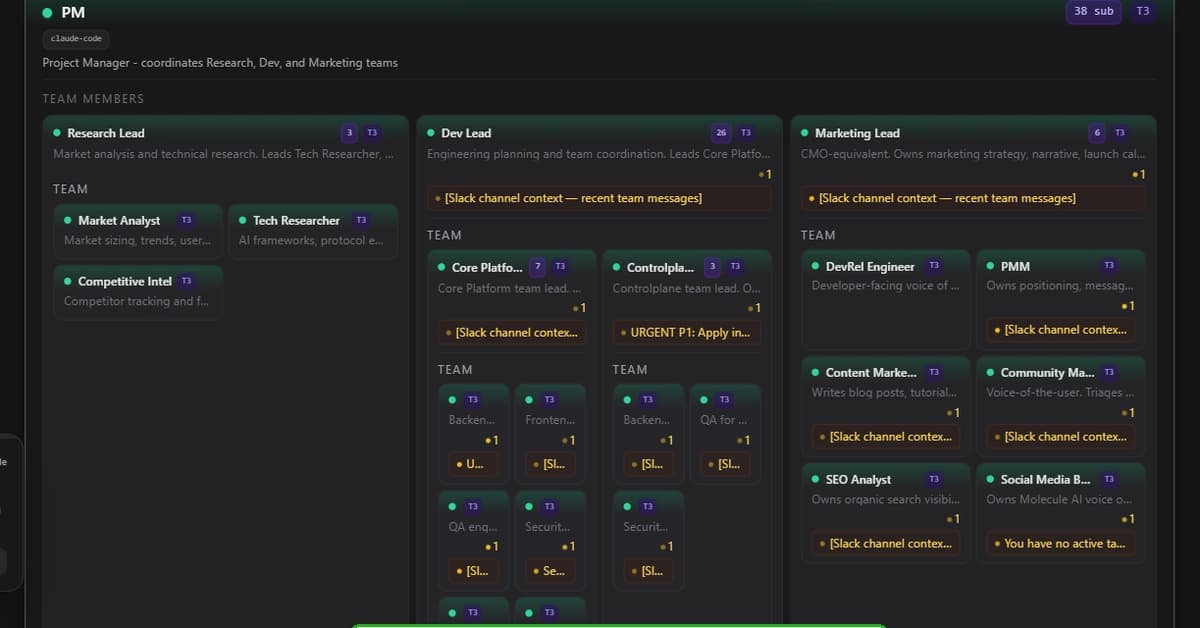
We built it during the NVIDIA DGX Spark Full-Stack AI Hackathon — and it ended up winning 1st place overall 🏆
Dev.to

Stop Losing Progress: Setting Up a Pro Jupyter Workflow in VS Code (No More Colab Timeouts!)
Dev.to
Building AgentOS: Why I’m Building the AWS Lambda for Insurance Claims
Dev.to

Where we are. In a year, everything has changed. Kimi - Minimax - Qwen - Gemma - GLM
Reddit r/LocalLLaMA
Where is Grok-2 Mini and Grok-3 (mini)?
Reddit r/LocalLLaMA


