
Feature Weighting Improves Pool-Based Sequential Active Learning for Regression
arXiv cs.LG / 4/3/2026
💬 OpinionIdeas & Deep AnalysisModels & Research
Key Points
- The paper studies pool-based sequential active learning for regression and identifies a gap in prior methods that compute inter-sample distances without accounting for which features matter most.
- It introduces five feature-weighted active learning variants (three single-task and two multi-task), using ridge regression coefficients from a small labeled set to weight features during distance calculations.
- Experiments indicate the proposed feature-weighting approach is easy to implement and almost always improves the performance of four existing active learning baselines for both single-task and multi-task regression.
- The authors suggest the strategy can be extended to stream-based active learning and potentially adapted to classification algorithms as well.
- Overall, the work offers a practical enhancement to sample-selection quality under limited labeling budgets by making representativeness/diversity computations more feature-aware.
Related Articles

90000 Tech Workers Got Fired This Year and Everyone Is Blaming AI but Thats Not the Whole Story
Dev.to

Microsoft’s $10 Billion Japan Bet Shows the Next AI Battleground Is National Infrastructure
Dev.to
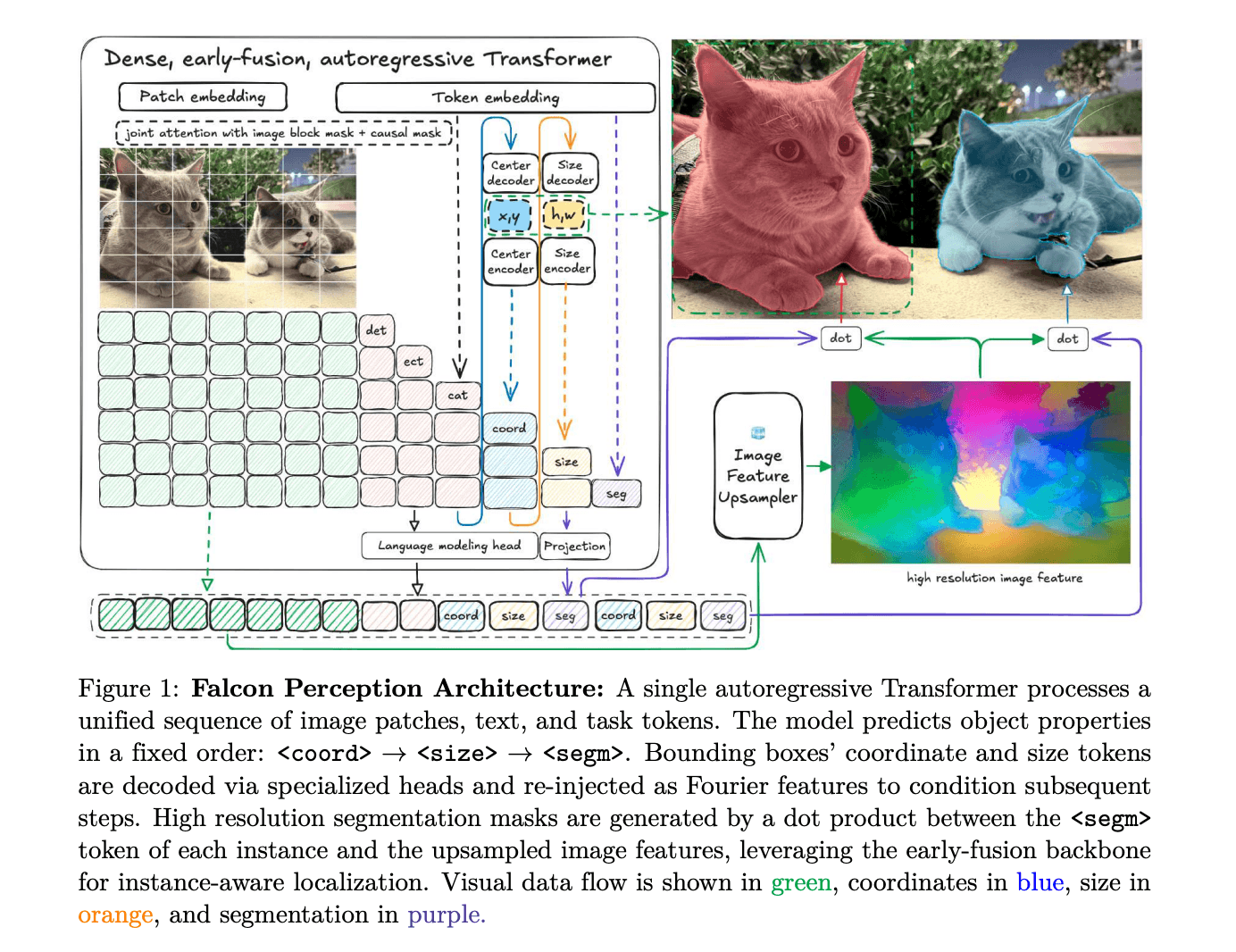
TII Releases Falcon Perception: A 0.6B-Parameter Early-Fusion Transformer for Open-Vocabulary Grounding and Segmentation from Natural Language Prompts
MarkTechPost

The house asked me a question
Dev.to

Precision Clip Selection: How AI Suggests Your In and Out Points
Dev.to


