
Skill-informed Data-driven Haptic Nudges for High-dimensional Human Motor Learning
arXiv cs.RO / 4/15/2026
💬 OpinionIdeas & Deep AnalysisModels & Research
Key Points
- The paper introduces a data-driven method for designing vibrotactile haptic nudges that account for a learner’s estimated skill when training a novel motor task in a high-dimensional, redundant movement space.
- It models human motor learning with haptic feedback using an Input-Output Hidden Markov Model (IOHMM) that separates latent skill progression from observable performance signals.
- The authors cast optimal nudge design as a Partially Observable Markov Decision Process (POMDP) to compute a policy that minimizes long-term performance cost while steering learners toward better skill states.
- In a human study (N=30) using a hand exoskeleton for a high-dimensional task, the POMDP-based policy produced significantly faster improvement in movement efficiency and endpoint accuracy than heuristic or no-feedback groups.
- The analysis suggests the POMDP approach helps learners discover efficient low-dimensional motor representations more rapidly, indicating improved motor learning structure beyond surface performance gains.
Related Articles
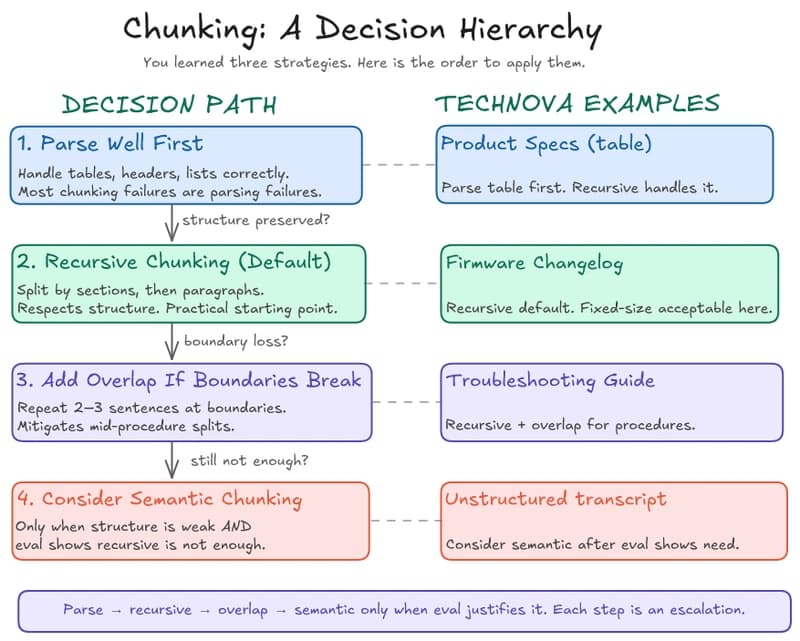
RAG in Practice — Part 4: Chunking, Retrieval, and the Decisions That Break RAG
Dev.to
Why dynamically routing multi-timescale advantages in PPO causes policy collapse (and a simple decoupled fix) [R]
Reddit r/MachineLearning

How AI Interview Assistants Are Changing Job Preparation in 2026
Dev.to

Consciousness in Artificial Intelligence: Insights from the Science ofConsciousness
Dev.to

NEW PROMPT INJECTION
Dev.to


