
Optimizing Grasping in Legged Robots: A Deep Learning Approach to Loco-Manipulation
arXiv cs.RO / 5/6/2026
💬 OpinionDeveloper Stack & InfrastructureModels & Research
Key Points
- The paper introduces a deep learning framework to improve how quadruped robots equipped with arms grasp objects, emphasizing both precision and adaptability.
- It uses a sim-to-real pipeline in the Genesis simulation environment to generate a large synthetic dataset of grasp attempts, producing pixel-wise grasp-quality maps as ground truth.
- A custom CNN with a U-Net-like architecture is trained on multi-modal onboard sensing inputs (RGB, depth, segmentation masks, and surface normal maps) to output a grasp-quality heatmap.
- The method was validated on a four-legged robot that successfully completed a loco-manipulation task end-to-end, including navigation, perception, grasp pose prediction, and executing a precise grasp.
- The work argues that training with advanced simulated sensing can scale effectively while reducing the need for costly physical data collection.
Related Articles

SIFS (SIFS Is Fast Search) - local code search for coding agents
Dev.to

BizNode's semantic memory (Qdrant) makes your bot smarter over time — it remembers past conversations and answers...
Dev.to
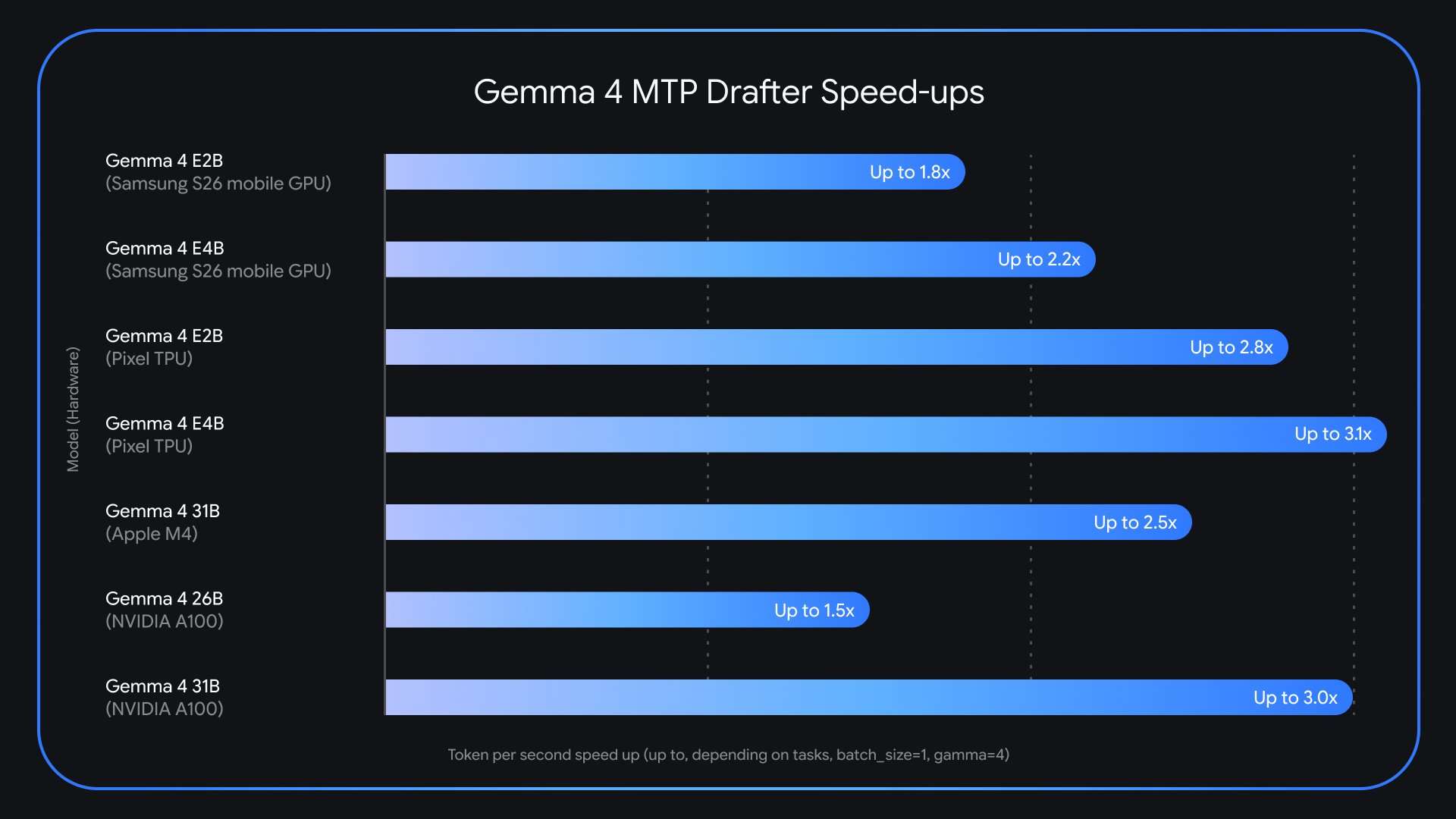
Google AI Releases Multi-Token Prediction (MTP) Drafters for Gemma 4: Delivering Up to 3x Faster Inference Without Quality Loss
MarkTechPost
Solidity LM surpasses Opus
Reddit r/LocalLLaMA

Quality comparison between Qwen 3.6 27B quantizations (BF16, Q8_0, Q6_K, Q5_K_XL, Q4_K_XL, IQ4_XS, IQ3_XXS,...)
Reddit r/LocalLLaMA


