
The Anatomy of Uncertainty in LLMs
arXiv cs.AI / 3/27/2026
💬 OpinionIdeas & Deep AnalysisModels & Research
Key Points
- The paper argues that existing LLM uncertainty methods (single scores or aleatoric/epistemic splits) do not provide actionable guidance for improving generative models.
- It proposes decomposing LLM uncertainty into three semantic components: input ambiguity, knowledge gaps, and decoding randomness.
- Experiments suggest the dominant uncertainty component can vary depending on model size and task type.
- The framework is presented as a way to better audit LLM reliability and detect hallucinations, enabling more targeted interventions for trustworthy deployments.
広告
Related Articles
Got My 39-Agent System Audited Live. Here's What the Maturity Scorecard Revealed.
Dev.to
The Redline Economy
Dev.to
$500 GPU outperforms Claude Sonnet on coding benchmarks
Dev.to
From Scattershot to Sniper: AI for Hyper-Personalized Media Lists
Dev.to
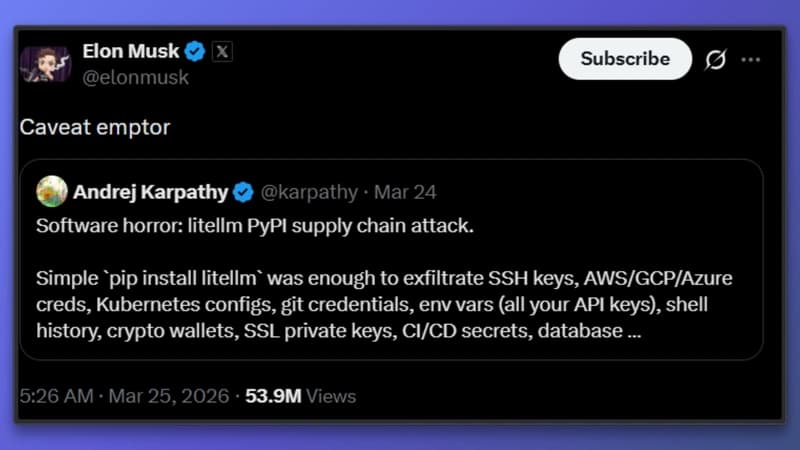
The LiteLLM Supply Chain Attack: A Wake-Up Call for AI Infrastructure
Dev.to


